Introduction
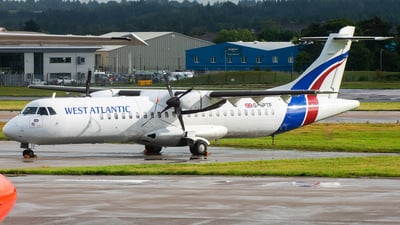
On 7 March 2023, an ATR 72-202, registration G-NPTF, experienced a rudder control difficulty during landing at Belfast International Airport. The aircraft was operated on a commercial air transport (cargo) flight from East Midlands Airport. Both crew members were uninjured, and no damage was reported.
History of the Flight
The crew reported for duty at 2320 hrs on 6 March 2023. During the pre-flight checks, both pilots noted that the rudder was very stiff to move, but decided to continue the flight given the slight crosswind at the destination. The flight to Belfast was uneventful, with cloud and icing encountered during climb. Weather at Belfast was CAVOK with light winds. The co-pilot flew an ILS approach to Runway 25, disconnecting the autopilot at 700 ft aal. During the flare, the co-pilot attempted to correct a slight left drift using rudder but found the rudder pedals almost impossible to move. The commander immediately took control, landed the aircraft, and used nosewheel steering for directional control on the runway. After landing, both pilots found the rudder pedals barely moving; later at the parking stand, the pedals would not move at all.
Investigation Findings
Examination of the aircraft the following day revealed that the rudder was almost immovable from either set of rudder pedals in the cockpit or by physically pressing on the rudder outside. The investigation found multiple faults in the rudder control system. The major cause of the extreme rudder stiffness was the degradation of the steel rudder rear quadrant support bearings due to corrosion. Moisture ingress in the vicinity of the bearings likely contributed to their degraded condition. The installation of the rudder damper may also have contributed to the rudder stiffness, albeit to a lesser extent.
Contributing Factors
A Service Bulletin recommending replacement of all flight control bearings with corrosion-resistant stainless steel bearings had not been embodied on the aircraft. The sealed nature of the bearings and their installed location precluded visual inspection of their condition.
Actions Taken
The operator took actions to ensure the continued airworthiness of its ATR fleet. The manufacturer also took, or committed to taking, safety actions, including updating the Illustrated Parts Data to specify stainless steel equivalents, updating troubleshooting guidance, and publishing a communication to remind operators of the existing Service Bulletin.