Casualties unknown

Controller Clearances Lead to Heading Separation Violation on Same Runway (N248AT)

Chicago, IL, US

On March 8, 1993, an Atr ATR 72 (registration N248AT) operated by Simmons was involved in an aviation accident near Chicago, IL. Investigators recorded the probable cause as: The turn to a heading of 360 degrees violated the minimum divergence heading separation standards of 15 degrees for airplanes taking off on the same runway as set forth in ATC Handbook 7110-65G. This summary draws on records from the U.S. National Transportation Safety Board (NTSB) historical archive; 11 related events involving the same aircraft type or operator are linked below.

Sourcesthe U.S. National Transportation Safety Board (NTSB) historical archivePrimary reportUpdated 2026-06-10Data APIEditorial standards
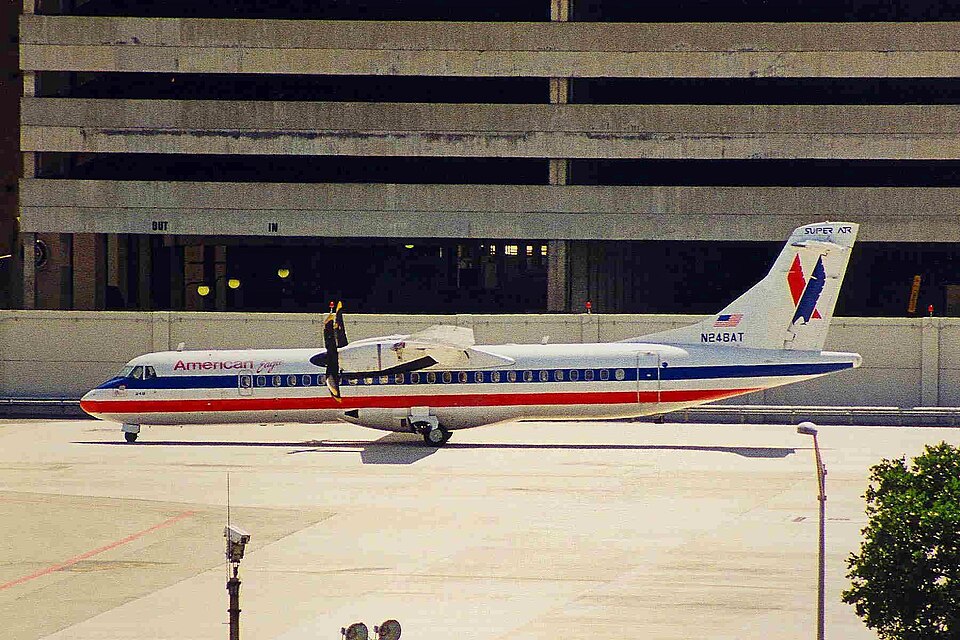
Aircraft registered N248AT
Aircraft registered N248AT. Photo: Ken Fielding / CC BY-SA 3.0, via Wikimedia Commons

A local controller cleared two aircraft for takeoff on the same runway with headings that violated minimum divergence standards set by the ATC Handbook.

Incident Overview

A local controller issued takeoff clearances to two aircraft on the same runway, resulting in a violation of minimum heading separation standards. The controller first cleared Simmons Flight 4298 for takeoff on Runway 32L T-1 with instructions to fly the runway heading after departure. Subsequently, the controller cleared American 1106 for takeoff on the same runway, Runway 32L, with instructions to turn to a heading of 010 degrees.

Sequence of Events

After both aircraft were airborne, the controller cleared Simmons Flight 4298 to turn to a heading of 360 degrees. This turn created a conflict with the heading assigned to American 1106. The difference between the assigned headings of 360 degrees for Simmons Flight 4298 and 010 degrees for American 1106 was only 10 degrees.

Violation of Standards

The turn to 360 degrees violated the minimum divergence heading separation standards for aircraft taking off on the same runway. ATC Handbook 7110-65G specifies that a minimum of 15 degrees of heading separation is required between aircraft departing from the same runway. The actual separation between the two aircraft was less than this threshold, constituting a procedural deviation.

Conclusion

The incident involved two aircraft—Simmons Flight 4298 and American 1106—both cleared for takeoff on Runway 32L. The controller's clearance for Simmons Flight 4298 to turn to 360 degrees while American 1106 was assigned 010 degrees resulted in a heading differential of only 10 degrees, which did not meet the required 15-degree minimum standard.

Probable cause

The turn to a heading of 360 degrees violated the minimum divergence heading separation standards of 15 degrees for airplanes taking off on the same runway as set forth in ATC Handbook 7110-65G.

Investigation report by the U.S. National Transportation Safety Board (NTSB) historical archive. Original record: https://carol.ntsb.gov/event/20001211X11941. This page is a structured re-presentation; facts and quotes are in the National Transportation Safety Board (NTSB), United States.