History of the Flight
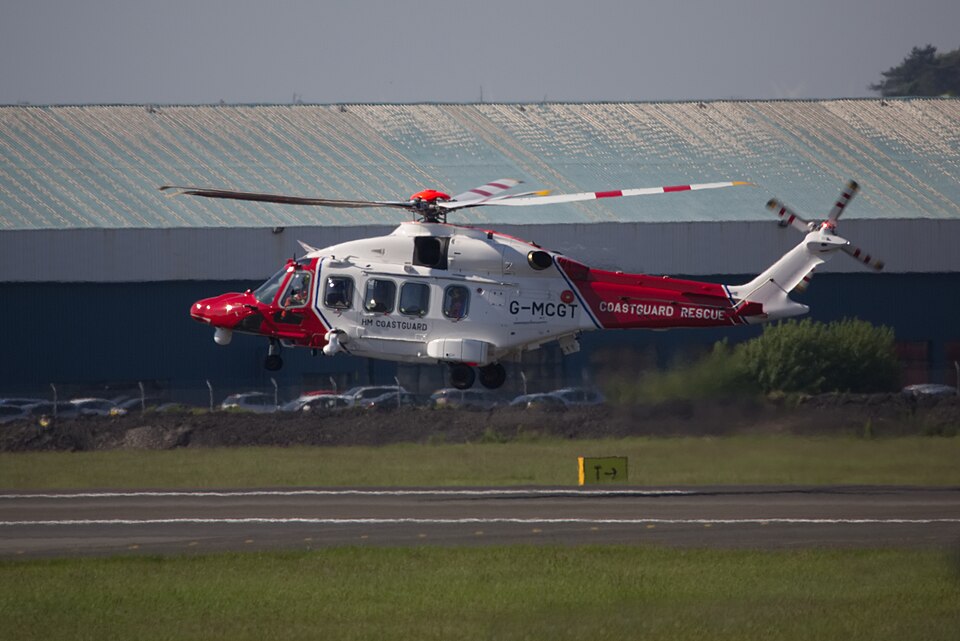
A Search and Rescue helicopter, a Leonardo AW189 registration G-MCGT, operated by an emergency services operator, was based at Prestwick Airport. The crew of four included two pilots and two technical crew members. The commander acted as Pilot Monitoring (PM) in the right seat, while the co-pilot was Pilot Flying (PF) in the left seat.
At 2002 hrs on 26 July 2021, the crew received a task to collect a casualty from a beach at Ballintoy Harbour, Northern Ireland. They departed Prestwick at 2011 hrs under VFR clearance. Weather conditions included a cloud base lowering as they flew westward. The PF descended to 200 ft to remain below cloud, encountering fog and low cloud.
Three Approaches
The crew made three approaches to the landing site. During the first approach, the PF could not identify the landing site due to fog and repositioned. The second approach was also aborted when the PM, perceiving the approach was too fast, instructed a go-around. The PF initially did not act but then executed a right turn onto the escape heading.
For the third approach, the PM planned to hover over the sea north of the harbour, descend to 50 ft, and hover taxi in. The PM selected HDG on the AFCS, capturing a heading of 087°. The PF turned right and, once established on a heading of 200°, selected HOV mode about 900 m from the harbour. Instantly, the helicopter yawed left onto a southerly track, heading directly towards cliffs.
Go-Around and Recovery
The PF selected Transition-Up (TU) mode, resulting in a level acceleration. The PM called for a right turn, and the Helicopter Terrain Awareness Warning System (HTAWS) triggered a caution terrain alert. A technical crew member urged a climb, prompting the PM to take control, disengage upper modes, and fly a climbing right turn onto the escape heading as a warning terrain alert sounded. The helicopter recovered safely over the sea and returned to Prestwick, landing at 2122 hrs.
AFCS Mode Mismatch
The unexpected yaw was caused by a mismatch between the previously selected AFCS heading reference and the heading flown by the PF. The helicopter and flight control system were serviceable and performed as designed, but the crew did not have a complete understanding of all AFCS modes. Other factors included overriding engaged modes by manual flight, lack of clarity between PF and PM roles, ineffective communication and coordination, and imprecise application of Standard Operating Procedures.
Meteorological Conditions
The forecast and observed conditions included lowering cloud base, fog, and poor visibility. During the transit, the pilots noted fog and low cloud, with visibility at times around 0.5 km. The landing site at Ballintoy Harbour was reported as having acceptable weather by emergency services.
Terrain and Location
Ballintoy Harbour is on the north coast of Northern Ireland, with cliffs rising to 100-160 ft adjacent to the harbour and ground rising to 700 ft about 1 km inland. The landing site was a cleared car park previously used by the operator.
Safety Actions
The operator took safety actions to raise awareness, improve autopilot mode knowledge, and include the event in initial and recurrent training.