History of the Flight
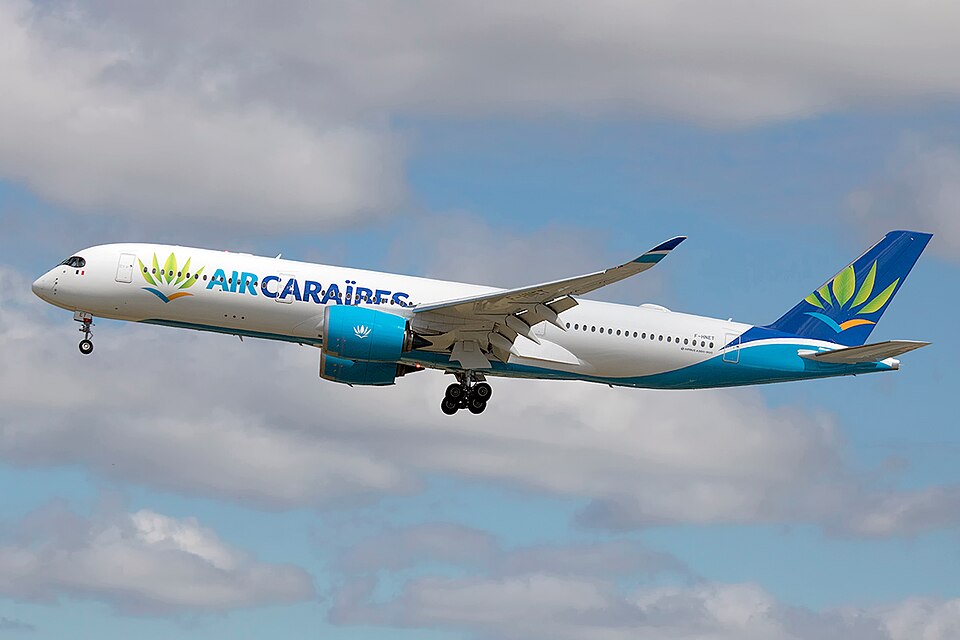
The aircraft, an Airbus A350-900 registered F-HNET, departed Paris-Orly at 13:24 UTC on a scheduled passenger flight to Cayenne Félix Éboué Airport in French Guiana. The flight crew consisted of a captain (pilot flying) and a co-pilot (pilot monitoring), along with 9 cabin crew and 142 passengers.
During the cruise at FL 400, shortly after 21:00, the crew anticipated a zone of turbulence. The captain activated the fasten seatbelt sign and informed occupants of an expected five to ten minutes of turbulence. The aircraft entered a 30-second period of moderate turbulence with vertical acceleration ranging from 0.43 G to 1.71 G and lateral acceleration from -0.08 G to 0.09 G. Speed fluctuated between Mach 0.79 and Mach 0.88. The autopilot and auto-thrust remained engaged. After clearing that zone, the captain announced that cabin crew could resume duties; the seatbelt sign remained lit for passengers. The crew began clearing meal trays.
As the aircraft descended, the pilots visually avoided cloud cells by flying alongside cloud masses and between layers. Approaching a new turbulence zone, the captain again instructed cabin crew to sit and fasten seatbelts. Near FL 100, the captain and purser communicated via interphone. Believing they were clear of turbulence, the captain authorized crew to leave seats to prepare the cabin for landing. The purser relayed this to rear cabin crew, who were finishing checks.
At approximately 21:25, at about 7,000 ft, the aircraft encountered a brief, severe turbulence lasting a few seconds. Visibility was good, it was not yet night, and the aircraft was outside cloud layers and not near a cloud cell edge. Vertical acceleration ranged from 0.42 G to 1.82 G (maximum differential 0.95 G) and lateral acceleration from -0.14 G to 0.12 G. Calibrated airspeed fluctuated between 245 kt and 256 kt, vertical speed varied from -1,100 ft/min to 430 ft/min then back. The autopilot and auto-thrust remained engaged.
Consequences and Damage
The purser suffered a double ankle fracture, classified as a serious injury. Two other cabin crew members sustained back and head injuries. The purser was replaced for the remainder of the approach. Medical assistance was requested upon landing. After landing, airport rescue and firefighting personnel examined the injured; two cabin crew required no further examination, but the purser was advised to seek hospital care.
Weather and Radar Information
During flight planning, the crew noted forecast storms, towering cumulus, and cumulonimbus near Cayenne. Several SIGWX charts indicated severe icing and storms. The crew had identified convective zones and turbulence during the arrival briefing. According to pilots, there were discrepancies between onboard weather radar (Honeywell RDR-4000) and visual observations: zones displayed as active were not visible, and visible convective cells were not shown on radar. The radar was set to auto-tilt with varying manual gain settings. The eWAS application on the electronic flight bag displayed convective zones in forecast mode but not in observation mode. No pilot reports alerted the crew to turbulence risk.
Météo-France described the meteorological situation as standard for the season: moist unstable weather with marked diurnal convection and unstable advections near the ocean. Radar images placed the aircraft at the edge of a line of rainfall where convection was strongest, a location prone to significant vertical movements and turbulence. The report notes that weather radars detect liquid water reflectivity; ice crystals in clouds have low reflectivity, and clear-air turbulence contains no water droplets. Convection inside cloud layers may not be detected by even latest-generation radars and may not be visually apparent.
Conclusions
The investigation determined that the pilots had correctly identified turbulence risks and appropriately instructed occupants to remain seated with seatbelts fastened during the first encounter, preventing injuries. After passing FL 100, outside clouds and believing turbulence had passed, the captain authorized cabin crew to leave their seats. The subsequent turbulence lasted only a few seconds but caused the injuries. No probable cause was formally assigned by the investigation.