Occurrence
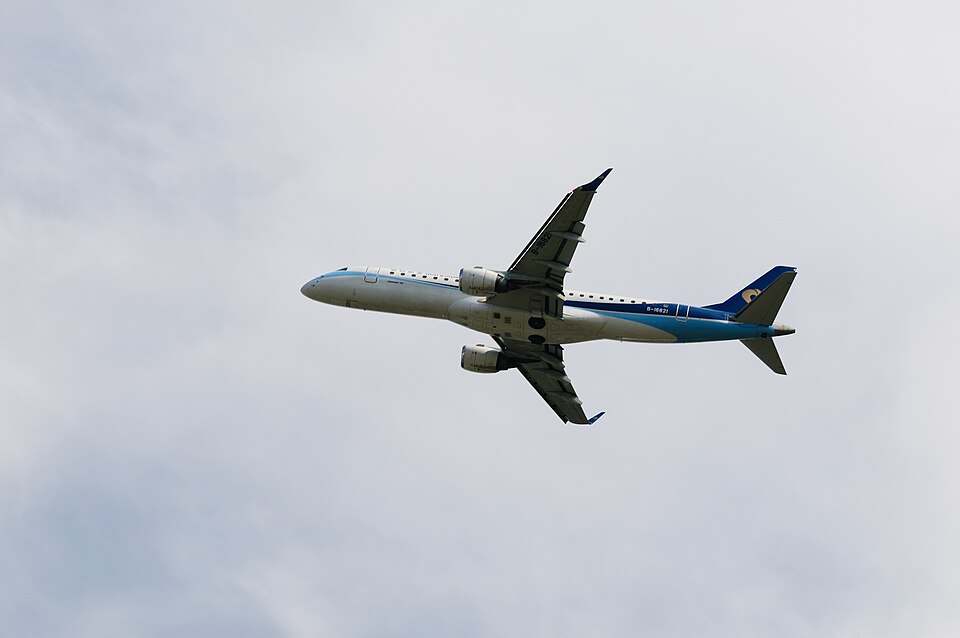
On September 20, 2014, Mandarin Airlines flight AE964, a scheduled passenger flight operating an ERJ-190 with registration B-16821, departed Zhengzhou International Airport, Henan Province, China at 1852 Taipei time for Taichung International Airport. The aircraft carried 2 flight crew, 1 on-board mechanic, 3 cabin crew, and 73 passengers, totaling 79 persons. The captain was the pilot flying (PF) and the first officer (FO) was the pilot monitoring (PM).
Approach and Weather
During initial approach, the flight crew received ATIS G weather information: visibility 9,000 feet, wind 330 degrees at 5 knots, with thunderstorm overhead. Taipei Approach granted landing clearance for runway 36. At 2113:06, Taipei Approach informed the crew of thunderstorm overhead at Taichung. At 2126:26, the aircraft descended through the Final Approach Point; AWOS data showed RVR of 550 meters, which the tower controller did not relay. The crew set windshield wipers to HI, Auto Braking to MED, and flaps to 5 (20 degrees) at pressure altitude 1,445 feet.
Landing and Excursion
The final approach was normal until 50 feet. At pressure altitude 1,147 feet, the PM noted "runway insight" and the PF continued with autopilot engaged. At 2128, AWOS indicated wind 280 degrees at 9 knots, RVR 550 meters. At 2128:39.6, the EGPWS called "fifty"; one second later, the PF disengaged the autopilot at radio altitude 46.2 feet. At that time, the aircraft had pitch up 6.3°, right bank 4°, and heading 358.4°. No further callouts occurred until touchdown.
The aircraft deviated right of the runway centerline after passing 50 feet. After autopilot disengagement, the aircraft continued veering right, with localizer deviation from 0.073 to 0.315 dots. DVDR data showed the control column moved right during flare. The flight crew's crosswind correction was insufficient or in the wrong direction. The airplane touched down temporarily at 1,290 feet from the threshold, bounced, and touched down again one second later at 1,620 feet. The crew disengaged auto throttle at that time. The aileron and rudder were not in correct crosswind correction positions. The aircraft continued veering right; at 2128:51, the nose gear touched down at 2,120 feet and the right main gear left the runway edge.
Engine Event and Damage
At 2128:54, number 1 engine EGT dropped below idle; the PM identified a Master Caution for engine one failure. Between 2128:57 and 2128:58, the right main gear returned to the runway centerline at 3,230 feet. Neither thrust reverser was deployed. The crew taxied to the ramp on one engine and informed ATC of possible damage. Ground personnel found one runway edge light and one runway signage damaged. Maintenance discovered damage to the number 2 engine cowling and right main wheel tire. No personnel were injured.
Investigation Findings
The Aviation Safety Council (ASC) conducted the investigation with participation from CAA, Air Force, Mandarin Airlines, CENIPA, Embraer, NTSB, and GE. The probable causes identified were:
- Under heavy rain, low visibility, no runway centerline lights, and standing water, the crew should have initiated a go-around.
- The autopilot was disengaged late at 50 feet, hindering crosswind control during flare.
- Improper crosswind correction during flare caused the aircraft to land right of centerline and drift downwind.
- After a light bounce, aileron and rudder were not in correct crosswind positions, leading to veering off the runway.
Risk findings included lack of crew situational awareness on weather, go-around not initiated within touchdown zone, differences in autopilot usage policy, poor runway drainage, a manhole cover lifted by the aircraft, and tower not relaying RVR or wet runway condition. Other findings noted no evidence of hydroplaning, no drug impairment, and normal systems function except for an incorrect aileron parameter in DVDR documentation.
Recommendations
The ASC issued 17 safety recommendations to Mandarin Airlines, including enhancing go-around training, improving weather situation awareness, and reviewing autopilot policies.