Flight History
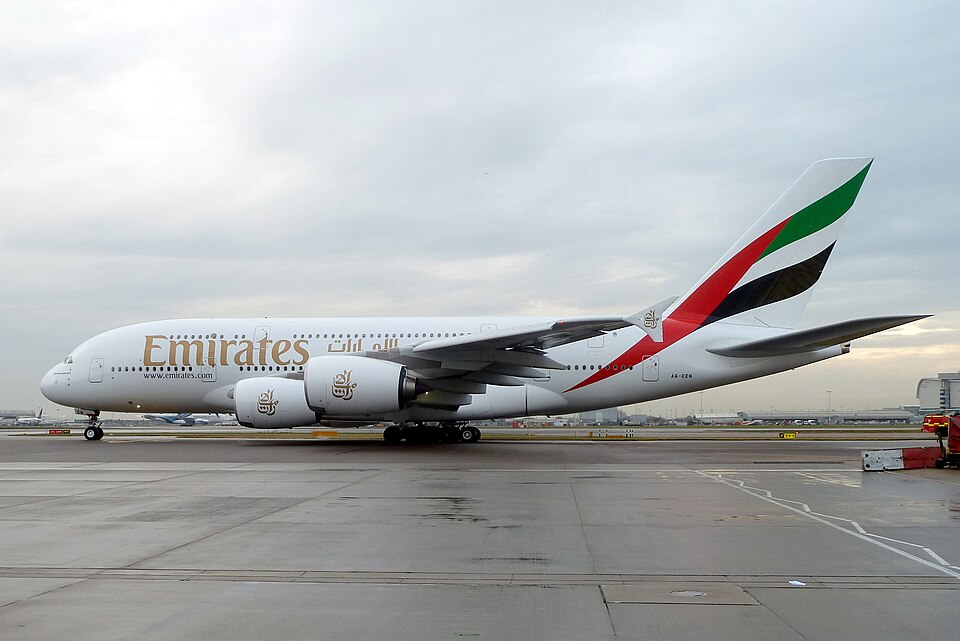
On 16 January 2020, an Emirates Airbus A380-861, registration A6-EEN, operated scheduled passenger flight EK763 from Dubai International Airport (OMDB), United Arab Emirates, to Johannesburg Tambo International Airport (FAOR), South Africa. The aircraft carried 526 persons: 2 flight crew, 24 cabin crew, and 500 passengers.
The commander, seated in the left seat and acting as pilot flying, stated that before the turbulence encounter, the daylight flight was uneventful without any weather-related avoidance actions. After entering the BEIRA Flight Information Region (FIR) in Mozambique at flight level FL400 near waypoint OKBIM, the crew noted light turbulence and observed on the weather radar that weather was off-path and beneath the aircraft. Soon, several magenta spots appeared on the radar along the flight path, indicating areas of wet turbulence within 40 nautical miles ahead.
At 1314:24 UTC, approximately six hours after departure, the aircraft experienced moderate to severe turbulence at FL400 while in BEIRA FIR. The autopilot and autothrust remained engaged throughout, and no operational exceedances occurred. The turbulence lasted about 30 seconds.
Injuries
One passenger who was not secured in a seat sustained a serious leg injury. No other injuries were reported.
Meteorological Conditions
The operational flight plan significant weather chart had forecast occasional convective activity containing embedded cumulonimbus clouds up to an altitude of 52,000 feet in the area.
Aircraft Information
The Airbus A380-861 (serial number 0135) was powered by four Engine Alliance GP7270 engines. There was no reported damage to the aircraft cabin.
Investigation
After the incident, the commander decided to continue to the destination as the passenger's injury was non-life-threatening and aircraft performance was unaffected. The remainder of the flight, lasting 1 hour 46 minutes, was uneventful. The Air Accident Investigation Sector (AAIS) of the United Arab Emirates investigated the occurrence, classifying it as an accident due to the serious injury. The investigation focused on flight operations, aircraft systems, and cabin safety during the turbulence encounter.