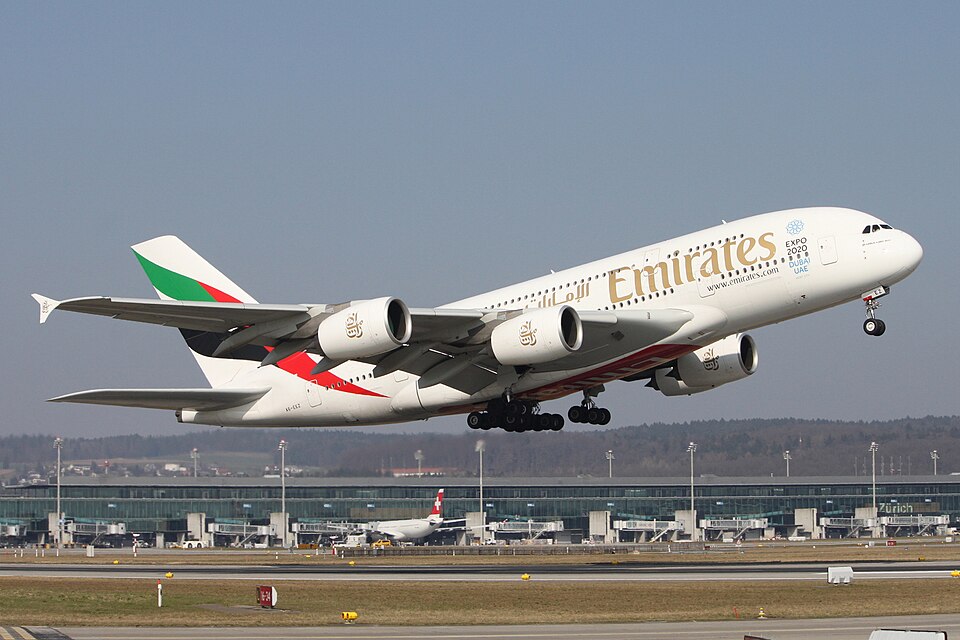
What happened
On 10 September 2017, an Emirates Airbus A380-861, registration A6-EEZ, was conducting a scheduled passenger flight from Dubai to Moscow. During the initial approach to runway 14R at Domodedovo International Airport, the aircraft descended below its assigned altitude of 500 meters QFE before establishing on the localizer. This prompted an alert from the Radar Controller, leading the crew to execute a go-around. During this maneuver, the aircraft reached a minimum radio altitude of 395 feet, triggering both terrain and glideslope warnings.
During a second approach attempt, the flight management system (FMS) experienced a sudden loss of the flight plan, leaving a blank screen. In an attempt to rectify this, the commander used the 'DIR TO' function to select a waypoint, which caused the aircraft to level off at 2,600 feet QNH. This necessitated a discontinued approach, though the crew eventually completed a third approach successfully.
The investigation
The GCAA AAIS investigation examined the flight crew's performance, the aircraft's automated systems, and air traffic control communications. The inquiry focused on why the aircraft descended below the cleared altitude and why the FMS failed during the second approach. Investigators analyzed the flight crew's use of the 'DIR TO' function, the reconfiguration of the FMS after the go-around, and the validity of the glideslope signals during the initial interception attempt.
Findings
- The initial descent below the cleared altitude was caused by the flight crew's erroneous perception that the aircraft would capture the 3° glideslope from above, combined with poor coordination between the pilots.
- The pilot flying relied solely on glideslope deviation indicators rather than cross-checking pressure altitude, vertical displays, or DME distance tables.
- The crew performed a glideslope interception from above while the aircraft was not yet established on the localizer, which deviated from standard operating procedures.
- During the second approach, a real-time computation error caused the FMS1 to reset after a multi-waypoint sequencing event.
- The crew failed to reconfigure the FMS with the correct approach sequence following the reset, which led to the flight plan disappearance and the subsequent altitude deviation.
- High workload during the approach was contributed to by the crew's expectation of specific radar vectors and the need to maintain high speeds during the dynamic approach phase.
- The Radar Controller's instruction to stop the descent used non-standard phraseology and was delivered with a delay that impacted the crew's response.