Summary
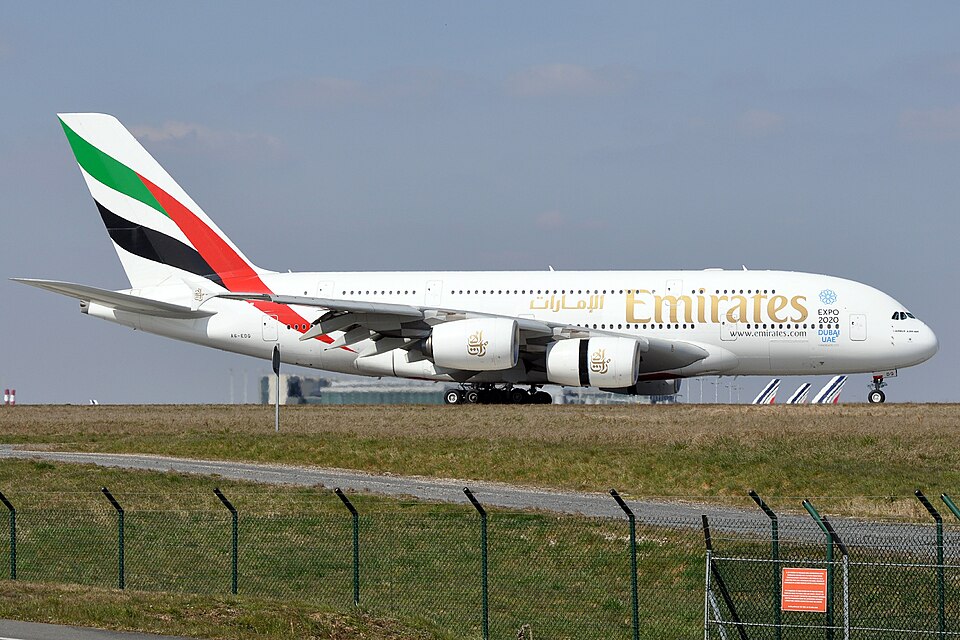
On 9 November 2016 at 1405 UTC, an Emirates Airbus A380-861 (registration A6-EDQ) operating flight EK002 departed London Heathrow for Dubai International Airport. The aircraft carried two flight crew, 25 cabin crew, and 345 passengers. During flight, an ECAM message indicated high green hydraulic system temperature, leading the crew to isolate the system as per FCOM instructions. This isolation necessitated emergency landing gear extension and imposed limitations on nose gear steering, flap/slat extension, and braking.
Factual Information
History of the Flight
On final approach at about 4,000 feet, eight minutes before landing, the crew selected the landing gear down. Indications showed all gear down and locked except the left wing landing gear. The crew declared an emergency four minutes before landing. The commander elected to continue because a go-around would have required retracting the gear (impossible with isolated hydraulics) and increased fuel consumption. The aircraft landed safely at 2022 UTC and was towed to stand F20. Upon arrival, it was found that the left wing gear had not released from its bay. No injuries were reported.
Damage to Aircraft
Examination revealed that the left wing landing gear had not extended and remained in its bay.
Aircraft Systems
The Airbus A380-861 was equipped with an emergency landing gear extension system (free-fall) using emergency unlock actuators (EUAs) for each gear. The EUA command wires had two independent channels (A and B).
Cause
The AAIS determined that the failure of the emergency unlock actuators to release the left wing landing gear was caused by flexure endurance fatigue damage to both channel A and channel B EUA command wires. This fatigue was induced by wind effects acting on an inadequately secured wiring loom during landing gear operation.
Safety Recommendations
Two prompt safety recommendations were issued to EASA: to determine the root cause of the actuator wire damage and to develop a design improvement. Two recommendations were issued to the operator (Emirates) to revise network control center procedures and provide towing instructions. Two recommendations were issued to the aircraft manufacturer (Airbus) to amend FCOM information and provide instructions for towing an aircraft from the runway with passengers and cargo under similar conditions.