Occurrence
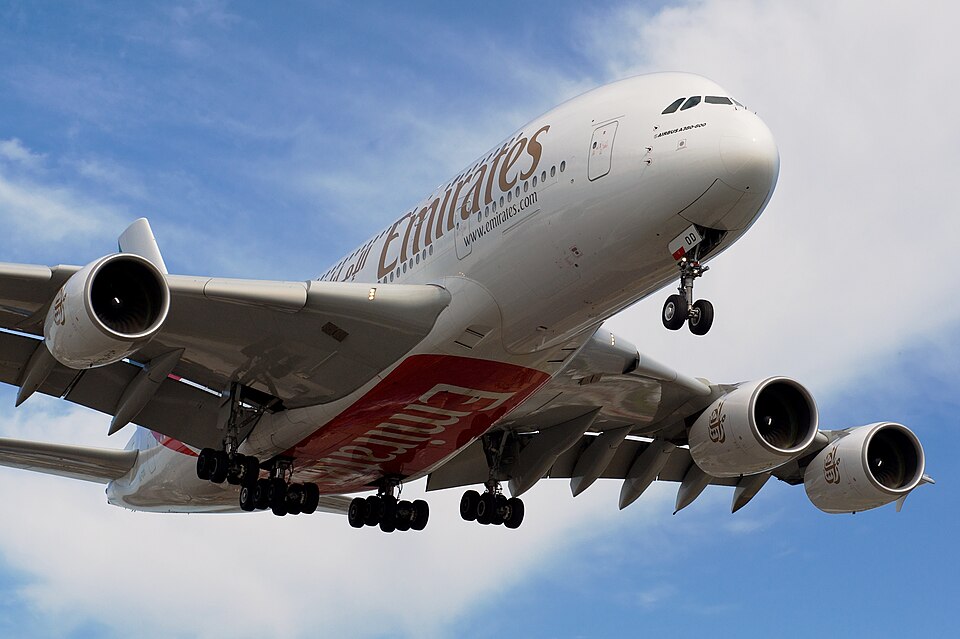
On 12 December 2014, at 0616 local time, an Emirates Airbus A380-861 (registration A6-EDD) was undergoing scheduled maintenance in an engineering hangar at Dubai International Airport. The aircraft had been inducted for a minor check on 10 December, with a planned release on 12 December. After uneventful engine ground runs, the aircraft was towed near the hangar for completion of outstanding work. While switching external ground power from the auxiliary power unit to external power 1, maintenance personnel observed a flashing light and smoke emanating from the lower avionics compartment below the cockpit.
Investigation
The Air Accident Investigation Sector (AAIS) of the United Arab Emirates was notified and opened an investigation file (AIFN/0021/2014). France, as the state of design and manufacturer, appointed an accredited representative. The investigation examined the electrical system and the failed component.
Findings
Examination revealed that a remote control circuit breaker (RCCB) designated 991JV6, located in the primary electrical power distribution center (PEPDC), had suffered a short circuit. The RCCB showed signs of burning and melting. The short circuit occurred between phases B1 and C1 of the RCCB due to an accumulation of dust and fluid conductor mixture that had not been addressed.
Damage and Injuries
No injuries were reported. The only damage was confined to the RCCB component; the aircraft did not sustain additional damage.
Cause
The AAIS determined that the short circuit of RCCB 991JV6 was caused by an unheeded significant buildup of dust and fluid conductor mixture between phases B1 and C1 of the RCCB.
Safety Recommendations
The investigation resulted in nine safety recommendations: five addressed to Airbus, three to Emirates, and one to the General Civil Aviation Authority. These recommendations pertained to training, maintenance programs, redesign of the RCCB hardware and protection, and predictive technology for smoke identification.