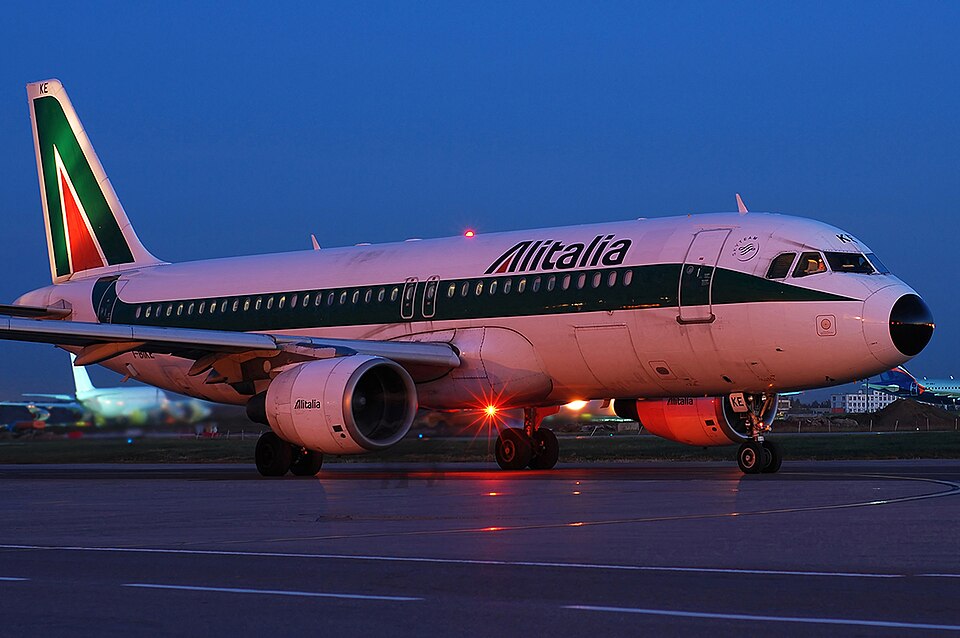
Incident Overview
On 25 June 2005, an Airbus A320-200 (registration I-BIKE) was on approach to Runway 09L at London Heathrow Airport when the Inertial Reference (IR) part of the No 1 Air Data Inertial Reference Unit (ADIRU) failed. The aircraft had departed from Milan with the No 3 ADIRU unserviceable, which was permitted by the Minimum Equipment List. The failure occurred after the landing gear had locked down, causing the autopilot and autothrottle to disconnect and the flight control laws to change from NORMAL to DIRECT law. Much of the flight instrument information on the commander's Primary Flight Display and Navigation Display was lost, leaving only ILS localiser, glideslope, airspeed, and altitude indications. The Enhanced Ground Proximity Warning System (EGPWS) terrain warning function also became unavailable.
Go-Around and Subsequent Actions
ATC instructed the aircraft to go-around from a height of about 200 ft because the preceding aircraft had not yet cleared the runway. The co-pilot, who had been handed control, performed the go-around. The crew then turned off the No 1 ADIRU, contrary to the prescribed ECAM procedures, in an attempt to diagnose the problem. This action caused additional data loss from the commander's instrument displays, rendered the nosewheel steering inoperative, and necessitated a gravity extension of the landing gear. The crew carried out the go-around, requested radar vectors, and communicated their difficulties to ATC, initially as a PAN call and later upgrading to a MAYDAY. The aircraft was vectored for a second approach and landed safely without injuries to the 6 crew and 98 passengers.
Crew Actions and Communication
During the go-around, the crew reviewed abnormal procedures and attempted to address the IR fault. The commander recalled from a pre-flight review that switching the ADIRU rotary selector to ATT and performing an alignment might recover attitude and heading information, but he could not locate the relevant text in the Flight Manual. The crew decided not to attempt the alignment procedure to expedite the landing. The commander's accented English led to communication difficulties with ATC. The commander advised ATC that the aircraft had suffered a "double inertial reference failure" and later stated they were only able to perform a CAT I ILS approach. The nosewheel steering became inoperative, and the commander expressed uncertainty about clearing the runway after landing. ATC cleared traffic ahead and provided priority.
Damage and Findings
The incident resulted in the failure of the No 1 and No 3 ADIRUs (the latter was already unserviceable). The aircraft sustained no damage beyond these failures. The crew's deviation from ECAM procedures was identified as the cause of the loss of further information and the inoperative nosewheel steering.