History of the Flight
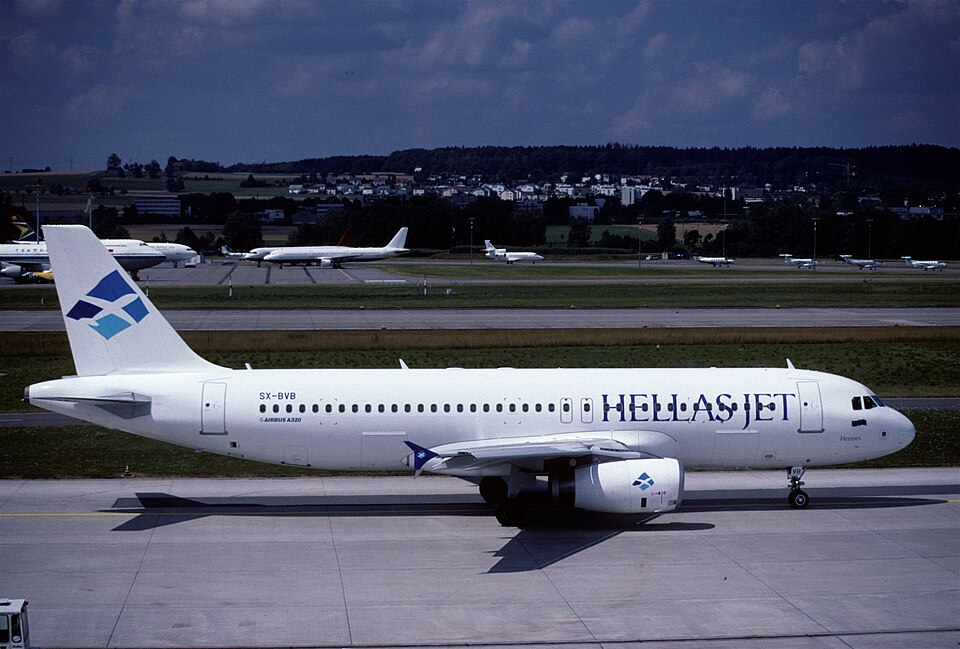
On 16 September 2003 at 2132 hours UTC, an Airbus A320, registration SX-BVB, was arriving at London Heathrow Airport for parking on Stand 150. The stand was previously occupied by a Boeing 757, which was being prepared for push back. During the turnaround of the Boeing 757, ground handling staff had parked a Ford Escort vehicle on the right side of the aircraft, adjacent to the nose landing gear. The company Standard Operating Procedure (SOP) permitted the vehicle to be parked on the stand but required its removal before the aircraft's anti-collision light was switched on prior to push back.
A dispatcher assigned to receive the incoming A320 was initially directed to Stand 240 but was later redirected to Stand 150. Upon arrival, the dispatcher observed the Boeing 757 still parked and being prepared for push back. After briefing his ramp team leader, he checked that service vehicles were being driven away, moved to the head of the stand, and switched on the Azimuth Guidance for Nose-in Stands (AGNIS). He then parked his car in the approved area as the Boeing 757 was pushed back. Informed that the A320 had landed, the dispatcher proceeded to the jetty, which was positioned unusually high. He was concerned about the jetty's serviceability and began testing its controls as the A320 turned onto the stand.
As the A320 edged forward, both pilots monitored the AGNIS and were unaware that the Ford Escort remained on the stand. Two load handlers attempted to signal the flight deck crew, but the aircraft came to a stop only after the forward underside of the right engine cowling contacted the vehicle's bonnet. The dispatcher, elevated on the jetty, could not see the vehicle due to the aircraft's body.
Analysis
The incident occurred because the Ford Escort had not been removed from the stand in accordance with the company SOP. Additionally, the dispatcher believed the stand was being cleared but did not wait for confirmation after the Boeing 757 push back before activating the AGNIS. Last-minute changes and concern about the jetty's serviceability diverted the dispatcher's attention from completing the stand clearance.
The flight crew, following the AGNIS, did not see the load handlers' attempts to signal them to stop. An emergency 'STOP' light was part of the AGNIS but could only be operated from a switch adjacent to the control panel at the head of the stand; the load handlers were unaware of this button. The switching on of the AGNIS is a signal to aircrew that the stand is clear of obstacles, making it essential to check the stand before activation.