Unstable approach and flap retraction error lead to ground proximity warning

No fatalities • Brisbane Airport, Queensland

A flight crew's failure to detect an incorrect flap setting during a high-workload approach resulted in an unstable approach and a ground proximity warning.

What happened

During the approach and landing phase, a flight crew was managing a high workload involving radio communications and checklist completion. While the aircraft was executing a turn, the first officer inadvertently moved the flap lever from the 15-degree position to 0 degrees, rather than extending them to the intended 30-degree setting. This error caused the aircraft's airspeed to increase significantly. Although the crew noticed the speed change, they could not immediately determine the cause.

As the aircraft descended, the airspeed rose from 114 kts at 507 ft to 128 kts at 358 ft, exceeding the stabilized approach criteria of VAPP + 10 kts. The incorrect configuration remained undetected until the ground proximity warning system alerted the crew to an incorrect configuration at an altitude of 173 ft. Consequently, a go-around was initiated.

The investigation

The investigation focused on the crew's management of the aircraft's performance and configuration during the approach. It was determined that the first officer likely selected the flap lever up instead of down and failed to crosscheck the flap indicator. The investigation also examined the aircraft's speed stability, noting that while the speed was within limits at 507 ft, it had drifted outside of the stabilized parameters by the time the warning occurred. The investigation also noted that had the crew successfully slowed the aircraft to the target VAPP of 104 kts for flap 30, the aircraft would have been 2 kts below the stall speed for the actual flap 0 setting.

Findings

  • The first officer inadvertently retracted the flaps from 15 to 0 instead of extending them to 30.
  • The crew failed to detect the incorrect flap setting due to high workload and simultaneous tasks including radio calls and checklists.
  • The aircraft's airspeed exceeded the stabilized approach criteria during the descent.
  • The error was only identified following a ground proximity warning regarding the aircraft's configuration.

Probable cause

The inadvertent retraction of the flaps from 15 to 0 degrees, combined with the crew's failure to monitor the flap indicator and airspeed due to high workload, led to an unstable approach and a configuration warning.

Frequently asked questions

What happened in the 2017-04-02 ATR-GIE Avions de Transport Régional ATR72-212A accident near Brisbane Airport, Queensland?

A flight crew's failure to detect an incorrect flap setting during a high-workload approach resulted in an unstable approach and a ground proximity warning.

Were there any fatalities in the 2017-04-02 ATR-GIE Avions de Transport Régional ATR72-212A accident?

No fatalities were recorded in this accident.

What aircraft was involved and where did it happen?

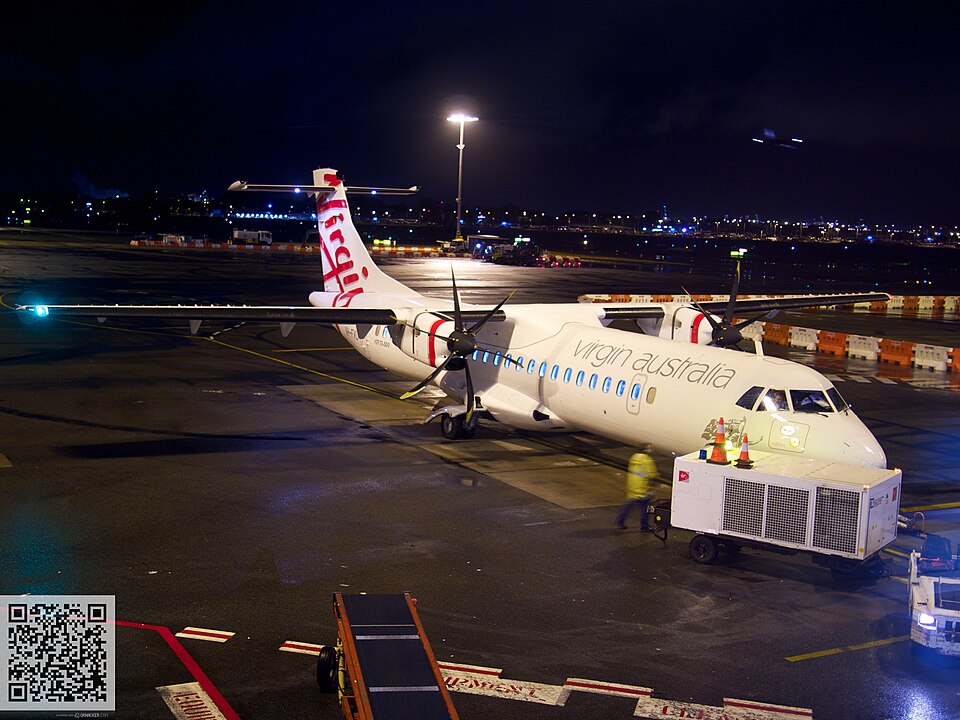
The accident on 2017-04-02 involved a ATR-GIE Avions de Transport Régional ATR72-212A, registration VH-FVL, operated by Virgin Australia Airlines, at Brisbane Airport, Queensland.

What was the probable cause of the accident?

The inadvertent retraction of the flaps from 15 to 0 degrees, combined with the crew's failure to monitor the flap indicator and airspeed due to high workload, led to an unstable approach and a configuration warning.

Loading the flight search…