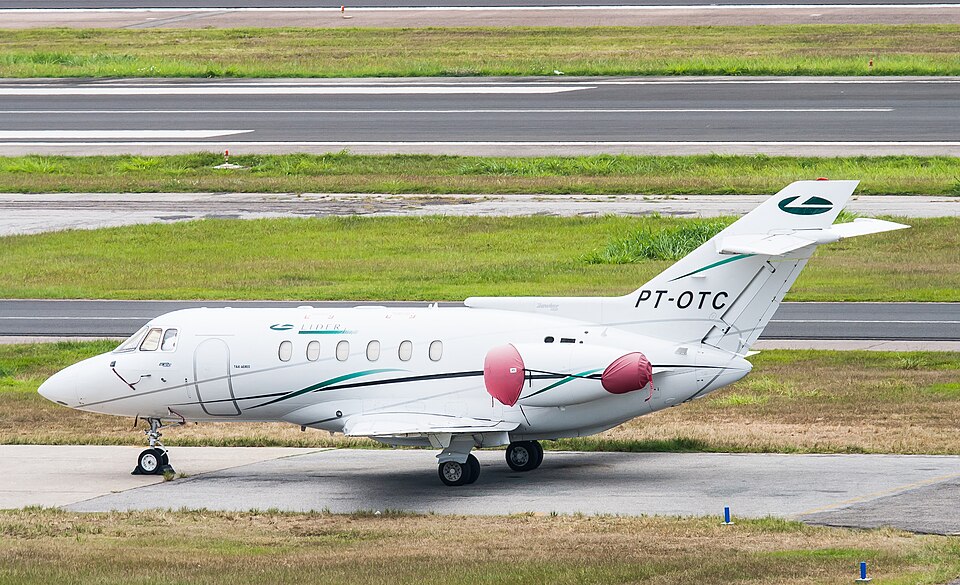
Overview
On a charter flight from Brasília to São Paulo-Congonhas, a tire burst during takeoff roll. The flight continued to São Paulo, but during descent, the crew detected abnormal landing gear and performed a manual recycling. They diverted to Guarulhos due to longer runways. Upon landing at night, the left main landing gear collapsed, causing the aircraft to veer off the runway and come to rest on grass. All three occupants evacuated safely. The aircraft was damaged beyond repair.
Sequence of Events
The aircraft departed Brasília-Presidente Juscelino Kubitschek Airport at 2025LT, carrying two pilots and one passenger, Senator Aécio Neves da Cunha. During takeoff, a tire on a main landing gear burst. The takeoff was continued, and after departure, the crew informed ATC. While descending to Congonhas, the crew noticed the landing gear was abnormal, manually recycled it, and decided to divert to São Paulo-Guarulhos Airport, which had longer runways suitable for an emergency landing. After touchdown at night, the left main landing gear collapsed. The aircraft veered off the runway and came to rest in a grassy area. All three occupants evacuated safely. The aircraft sustained damage beyond repair.
Probable Cause
The official finding identified the copilot's failure to assertively advise the pilot-in-command about the potentially abnormal condition, possibly influenced by power hierarchical distance, which contributed to the pilot's reduced situational awareness. This led to the pilot's decision to move the landing gear lever using the override system without adequate assessment. The copilot also did not propose identification of the fault or reading the checklist. The pilot did not request identification or checklist verification, contributing to non-compliance with the QRH restriction for retraction using the override system (If Retraction Is Essential). The abnormal conditions relating to the landing gear system were not simulated for the takeoff procedure, particularly the 'Landing Gear Lever Cannot Be Moved' failure, contributing to inadequate crew performance in identifying and managing the situation. Additionally, annual CRM training did not directly address planning continuity bias, and crew members were not alert to the potential perception of pressure when transporting VIPs. Contributing factors were identified in decision-making, decision support systems, flight planning and management, memory, communication, coordination, and crew training.