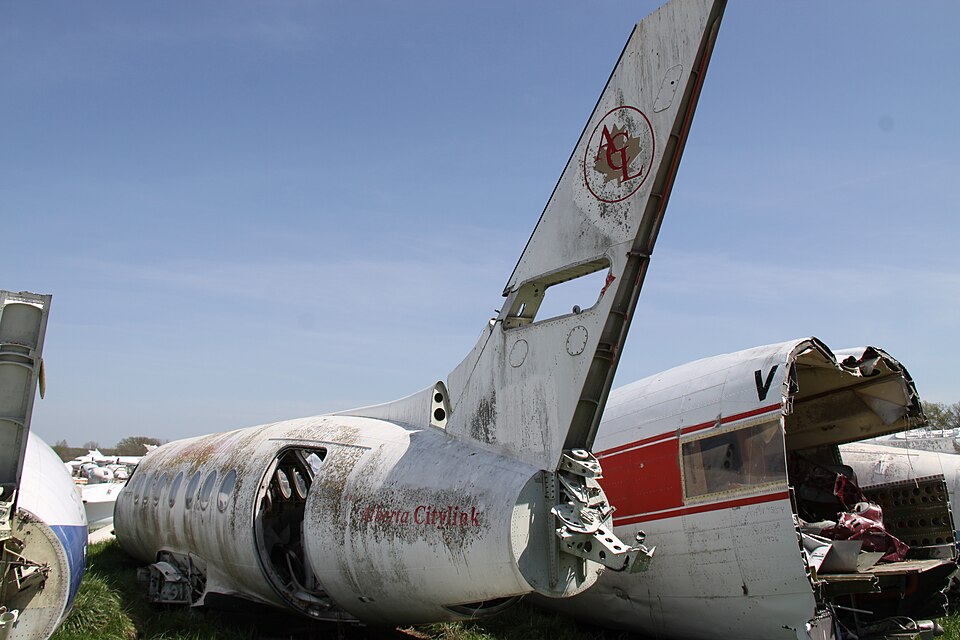
Incident Overview
At 1700 MST, Alberta Citylink Flight 933 departed Calgary for a scheduled service to Lloydminster, Alberta. The aircraft involved was a British Aerospace Jetstream 31 with serial number 815 and registration C-FBIE. On board were two pilots, thirteen passengers, and 250 pounds of freight and baggage.
Approach and Landing Dynamics
The crew conducted a non-precision automatic direction finder (ADF) approach to runway 25. The first officer initially flew the approach until the runway environment became visible. At that point, the captain assumed control, requested thirty-five degrees of flap, and initiated the final descent. Upon touchdown, the left main landing gear collapsed, causing both propellers to strike the runway surface.
Post-Impact Sequence
The aircraft slid along the runway on its belly pod for approximately 1,800 feet. When the left wing contacted snow at the edge of the runway, the aircraft rotated approximately 160 degrees. All passengers and crew members evacuated through the over-wing exit. No fire occurred, and there were no reported injuries among the occupants.
Investigation Findings
The investigation determined that an unstabilized approach led to a heavy landing because the captain changed the aircraft's configuration, resulting in a high rate of descent that was not arrested before runway contact. Contributing factors to the high descent rate included the reduction of engine power to flight idle, airframe ice accumulation, and the limited time available for the final descent. Additionally, left-to-right movement of the aircraft contributed to the damage sustained during landing.