Flight Background and Route
Alaska Airlines Flight 1866 (AS66) was a scheduled passenger flight from Anchorage, Alaska, to Seattle, Washington, with intermediate stops at Cordova, Yakutat, Juneau, and Sitka. The flight operated under Instrument Flight Rules (IFR). It departed Anchorage at 09:13 and landed at Cordova at 09:42. After a delay partly due to difficulty securing a cargo compartment door, the flight departed Cordova at 10:34 and landed at Yakutat at 11:07.
Communications and Clearances
While on the ground at Yakutat, AS66 received an air traffic control clearance to the Juneau Airport via Jet Route 507 to Pleasant Intersection, direct to Juneau, to maintain 9,000 feet or below until 15 miles southeast of Yakutat, then to climb to and maintain Flight Level 230 (FL230). The flight departed Yakutat at 11:35 with 104 passengers and seven crew members. At 11:46, AS66 contacted Anchorage ARTCC and reported level at FL230, 65 miles east of Yakutat. The controller then cleared the flight to descend at pilot's discretion to 10,000 feet to cross Pleasant Intersection at 10,000 feet, with a clearance limit to Howard Intersection. The clearance was acknowledged, and the controller provided the Juneau altimeter setting of 29.46 inches and requested a report when leaving 11,000 feet. At 11:51, AS66 reported leaving FL230, and the clearance limit was changed to Pleasant Intersection. At 11:54, the controller instructed AS66 to maintain 12,000 feet, and approximately one minute later, the flight reported level at 12,000 feet.
The controller explained changes to the flight's clearance by stating, "I've got an airplane that's not following his clearance, I've got to find out where he is," referring to N799Y, a Piper Apache that had departed Juneau at 11:44 on an IFR clearance to Whitehorse, Canada. AS66 acted as a communications relay between the controller and N799Y on two occasions. At 11:58, AS66 reported being at Pleasant Intersection entering the holding pattern. The controller then recleared the flight to Howard Intersection via the Juneau localizer. When asked if the flight was "on top" at 12,000 feet, the captain stated the flight was "on instruments." At 12:00, the controller repeated the clearance to hold at Howard Intersection with an expected approach time of 12:10. At 12:01, AS66 reported being at Howard, holding at 12,000 feet.
Descent and Loss of Contact
Six minutes later, the controller queried AS66 about its holding direction and position. Upon being advised that the flight had just completed its inbound turn and was on the localizer inbound to Howard, the controller cleared AS66 for a straight-in Localizer Directional Aid (LDA) approach, to cross Howard at or below 9,000 feet inbound. The captain acknowledged and reported leaving 12,000 feet. At 12:08, the captain reported "leaving five thousand five ... four thousand five hundred," after which the controller instructed AS66 to contact Juneau Tower. Contact was established shortly thereafter when the captain reported, "Alaska sixty-six Barlow inbound." The Juneau Tower Controller responded, "Alaska 66, understand, ah, I didn't, ah, copy the intersection, landing runway 08, the wind 080° at 22 occasional gusts to 28, the altimeter now 29.47, time is 09 1/2, call us by Barlow." No further communication was received from the flight.
Accident and Investigation Findings
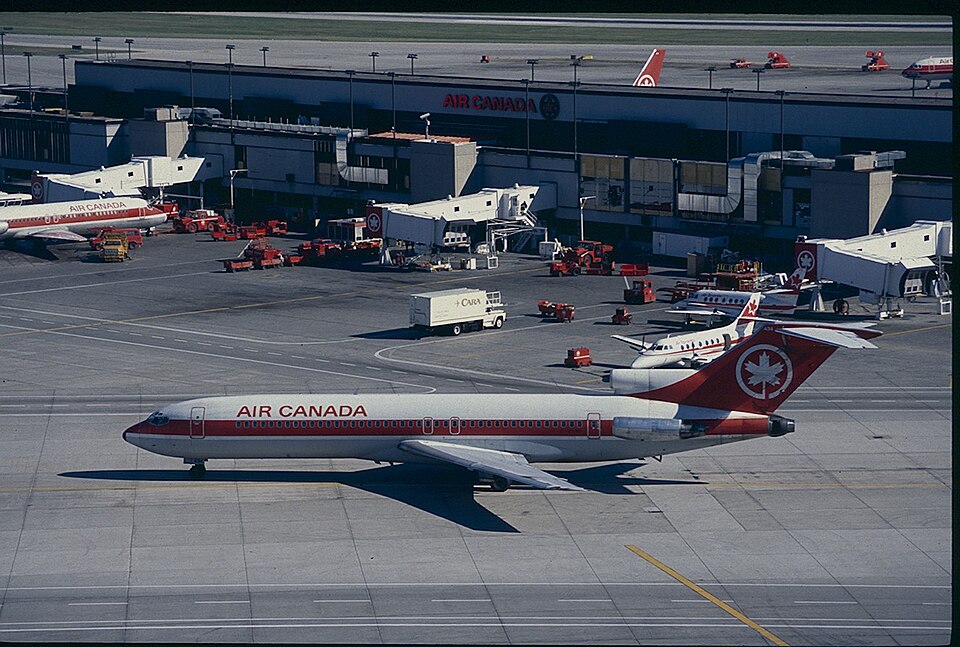
The Boeing 727 impacted the easterly slope of a canyon in the Chilkat Range of the Tongass National Forest at the 2,475-foot level. The aircraft disintegrated on impact, and the accident was not survivable. The investigation determined the probable cause to be a display of misleading navigational information concerning the flight's progress along the localizer course, which resulted in a premature descent below obstacle clearance altitude. The origin or nature of the misleading information could not be determined. The investigation further concluded that the crew did not use all available navigational aids to check the flight's progress along the localizer, nor were these aids required to be used. Additionally, the crew did not perform the required audio identification of the pertinent navigational facilities.