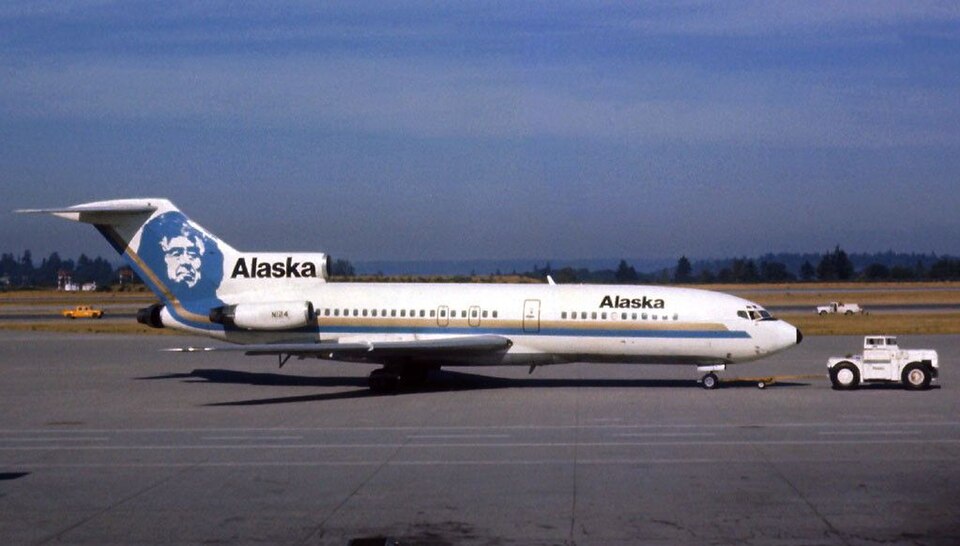
Incident Overview
On April 5, 1976, at approximately 0738 local time, Alaska Airlines Flight 60 departed Juneau, Alaska. The aircraft, a Boeing 727-81 with registration N124AS, was en route to Seattle with an intermediate stop scheduled at Ketchikan International Airport. The flight carried 43 passengers and seven crew members.
Approach Conditions
Anchorage Air Route Traffic Control Center cleared the flight for an Instrument Flight Rules (IFR) approach to Runway 11. At 0811, the aircraft reported out of 10,000 feet. Ketchikan Flight Service Station advised the crew of poor braking action and weather conditions including a ceiling of 800 feet, obscured visibility, light snow, fog, and winds from 330 degrees at 5 knots.
Deviation from Procedure
As the aircraft descended through 4,000 feet near the 17-mile DME fix, the captain acquired visual contact with the ground and water. He subsequently abandoned the ILS approach to continue visually. The captain established a personal visual glide slope at approximately 1,000 feet. Visual contact with the approach lights was made about two miles from the runway threshold.
Landing and Go-Around Attempt
The captain estimated touchdown occurred about 1,500 feet past the threshold of Runway 11. He reported the runway as wet and did not recall seeing the yellow 1,000-foot markers, although a passenger in seat 5A stated they were visible. After deploying ground spoilers and reversing engines, the captain found braking action to be poor and decided to execute a go-around.
The thrust reverser mechanism failed to disengage fully, preventing forward thrust. The captain reapplied reverse thrust and deployed spoilers again. Realizing the aircraft could not stop on the runway, he turned right, raised the nose, and passed over a gully and service road beyond the departure end of the runway. The aircraft came to rest in a ravine 700 feet past the runway end and 125 feet to the right of the centerline.
Official Findings
The probable cause was determined to be the captain's faulty judgment in initiating a go-around after committing to a full-stop landing following an excessively long and fast touchdown from an unstabilized approach. Contributing factors included the unprofessional decision to abandon the precision approach. Investigations found no evidence of aircraft structure or component failure prior to the crash. The flight crew was aware of the weather and runway conditions, which dictated a precision approach. The approach was not stabilized, with excessive airspeed and altitude at decision height. The first and second officers did not effectively intervene to correct the captain's departure from prescribed procedures, except for a comment about being high near the threshold.