Accident Description
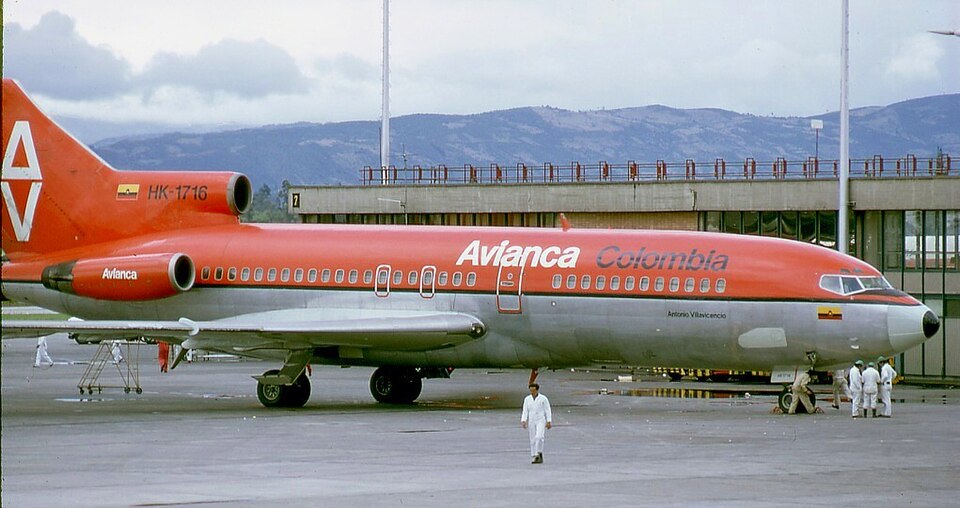
On an unspecified date, Avianca flight 410, a Boeing 727-21 registered as HK-1716, was destroyed when it impacted El Espartillo Mountain after taking off from Cúcuta Airport in Colombia. All 143 occupants sustained fatal injuries.
The flight was operating from Bucaramanga to Barranquilla, with en route stops at Cúcuta and Cartagena. The originally planned aircraft was unavailable, so HK-1716 was prepared instead, causing a departure delay of 2 hours and 30 minutes. The flight landed at Cúcuta at 12:28 local time.
Departure and Climb
At 13:06, the pilot requested clearance to start engines but was told of a 10-minute delay due to three incoming aircraft. The crew requested clearance for a climb on course to avoid further delay, and the tower granted this at 13:08, clearing them for engine start and climb on course VMC, with a temperature of 28°C. Additionally, an off-duty pilot was present in the cockpit and constantly disrupted the crew's work, affecting the pilot-in-command's supervision of the co-pilot. There was no crew briefing or instructions for the VMC departure.
The aircraft taxied to runway 33 and received take-off clearance at 13:13. After takeoff, the initial climb followed the extended runway centerline to the inner marker, where the aircraft began a continuous left turn. At 13:17, the pilot told the co-pilot to start turning right. Subsequently, the aircraft struck the peak of El Espartillo Mountain at an elevation of 6,343 feet.
Probable Cause
The official investigation determined the accident resulted from active and passive factors. Active factors included: the pilot-in-command diverting attention from operating the aircraft and failing to supervise the co-pilot, tolerating inappropriate cockpit interference by authorized persons, and continuing VFR flight into IMC; and a non-crew pilot interfering with crew duties. Passive factors included: lack of crew teamwork and coordination for VMC departure procedures, and delays due to aircraft change contributing to the pilot's decision to prioritize schedule over waiting as advised by the control tower.