Collision
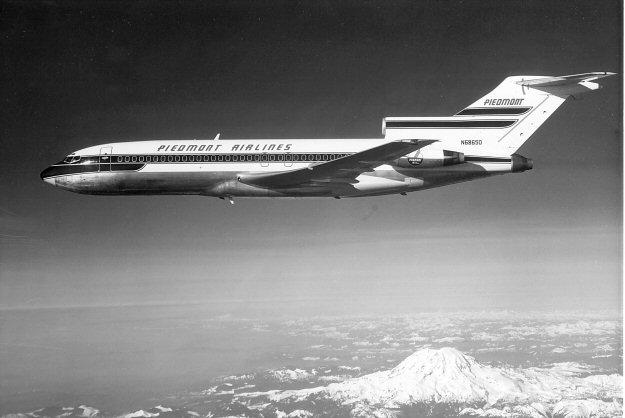
On the day of the accident, a three-engine aircraft, identified as a Boeing 727, departed Asheville Regional Airport at 1158 local time and climbed to its assigned altitude. About three minutes later, while climbing through 6,132 feet in limited visibility due to clouds, it collided with a Cessna 310 (registration N3121S). The Cessna, operated by Lanseair, was carrying two passengers and a pilot. Following the collision, both aircraft descended and crashed in a dense wooded area approximately nine miles southeast of Asheville Airport.
Wreckage
The wreckage of the Boeing 727 was found in a forest along a highway in Hendersonville. All 82 occupants on both aircraft were killed.
Investigation and Probable Cause
The official probable cause was determined to be the deviation of the Cessna from its IFR clearance, resulting in a flight path into airspace allocated to the Piedmont Boeing 727. The reason for the deviation could not be specifically identified. The FAA's minimum control procedures in handling the Cessna were cited as a contributing factor.
In June 2006, the NTSB reopened the investigation based on evidence submitted by an independent expert, which included that the Cessna pilot had informed ATC about his heading, that a small fire occurred in the 727's cockpit 35 seconds before impact, and that the inspector in charge was the brother of a Piedmont Airlines vice president.