5 fatalities

1999-07-07: Boeing 727-200 (VT-LCI) — Hinduja Cargo Services — Kathmandu-Tribhuvan, Nepal

Kathmandu-Tribhuvan, NepalTakeoff (climb)

On July 7, 1999, a Boeing 727-200 (registration VT-LCI) operated by Hinduja Cargo Services was involved in an aviation accident near Kathmandu-Tribhuvan, Nepal during takeoff. 5 people were killed. Investigators recorded the probable cause as: The accident occurred as the crew after take off did not adhere to the published Standard Instrument Departure (SID) procedure for runway 20 at Kathmandu, Nepal. This summary draws on records from the Bureau of Aircraft Accidents Archives (B3A); 8 related events involving the same aircraft type or operator are linked below.

Sourcesthe Bureau of Aircraft Accidents Archives (B3A)Primary reportUpdated 1781204261Data APIEditorial standards
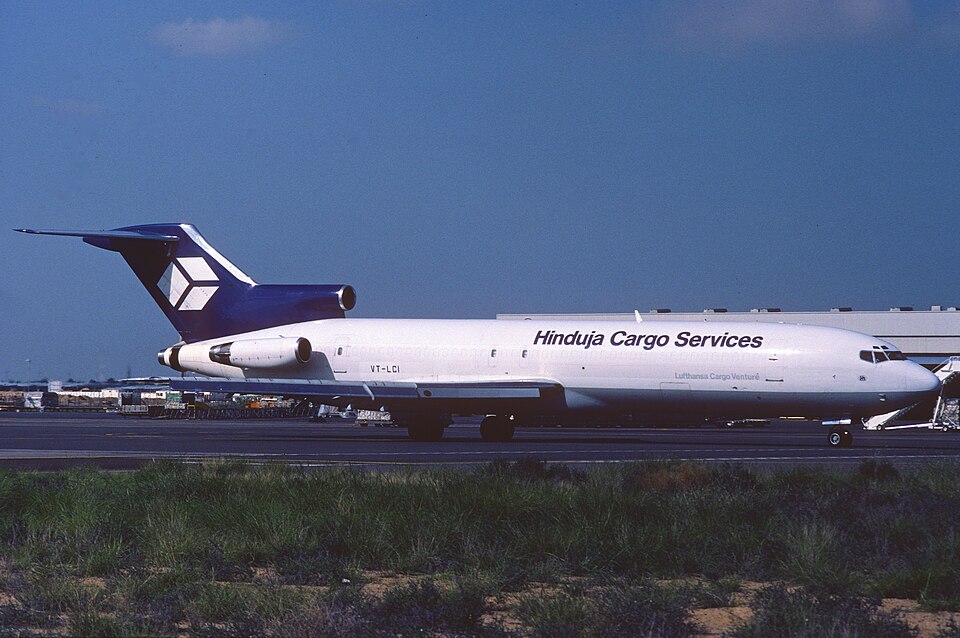
Aircraft registered VT-LCI
Aircraft registered VT-LCI. Photo: Aero Icarus from Zürich, Switzerland / CC BY-SA 2.0, via Wikimedia Commons

A cargo aircraft carrying five crew members and 21 tons of woolen carpets struck the slope of Mount Champadevi 11 km southwest of Kathmandu-Tribhuvan Airport after departing from runway 20. All five occupants were killed. The crew failed to adhere to the published Standard Instrument Departure procedure.

Accident Overview

On a cargo flight from Kathmandu-Tribhuvan Airport to Sharjah with an intermediate stop in New Delhi, the aircraft departed runway 20 carrying five crew members and a load of 21 tons of woolen carpets. After takeoff, the crew continued to climb but did not realize their altitude was insufficient. The aircraft struck the slope of Mount Champadevi, located 11 km southwest of the airport, and disintegrated on impact. All five crew members were killed.

Flight Details

The flight was a cargo operation scheduled from Kathmandu to Sharjah via New Delhi. The aircraft was loaded with 21 tons of woolen carpets. The takeoff was conducted from runway 20.

Accident Site

The collision occurred with the slope of Mount Champadevi, approximately 11 km southwest of Kathmandu-Tribhuvan Airport. The aircraft disintegrated upon impact.

Investigation Findings

The official investigation identified that the crew did not adhere to the published Standard Instrument Departure (SID) procedure for runway 20 at Kathmandu, Nepal. Several contributing factors were noted: an incomplete departure briefing given by the pilot-in-command while other cockpit activities were in progress; an unexpected airspeed decay to V2-3 during the initial right climbing turn south of the VOR while the co-pilot was busy with ATC; an improper power and climb profile used by the pilot-in-command after rolling the aircraft out on a southwest heading following the initial airspeed loss; inadequate intra-cockpit crew coordination and communication as the aircraft proceeded to and across the KTM VOR 4 DME arc before recommencing a shallow right turn; and incorrect and slow response to the initial and subsequent GPWS activations prior to the collision with terrain.

Probable cause

The accident occurred as the crew after take off did not adhere to the published Standard Instrument Departure (SID) procedure for runway 20 at Kathmandu, Nepal. The following contributory factors were identified: - Incomplete departure briefing given by P1 while other cockpit activities were in progress, - The unexpected airspeed decay to V 2 -3 during initial right climbing turn South of the VOR which occurred while P2 was busy with ATC, - The improper power and climb profile used by P1 after rolling the aircraft out on a southwest heading following the initial airspeed loss, - The inadequate intra cockpit crew coordination and communication as the aircraft proceeded to and across the KTM VOR 4 DME arc before recommencing a shallow right turn, and - The incorrect and slow response to the initial and subsequent GPWS activation prior to the collision with the terrain.