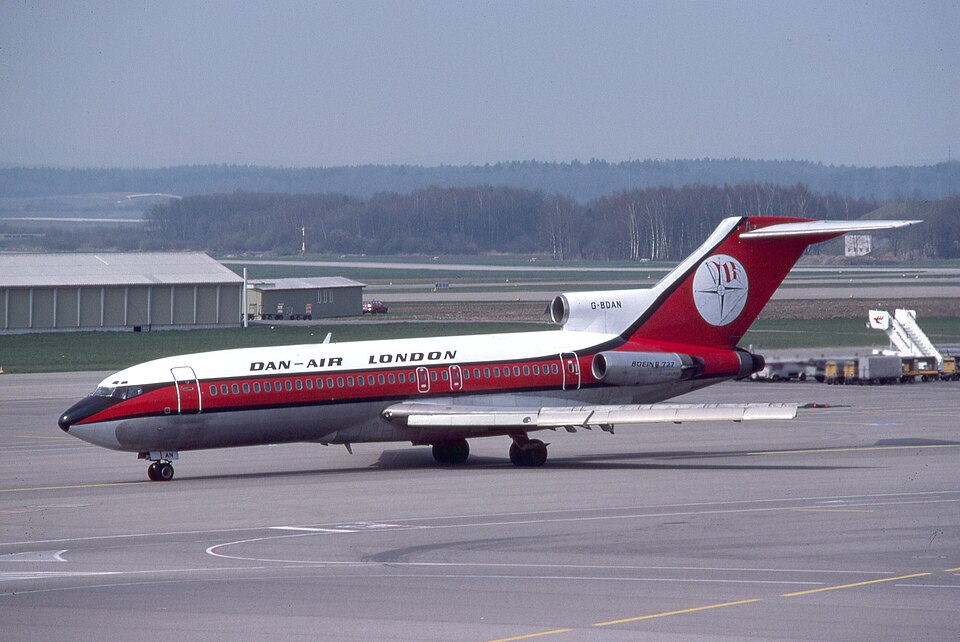
What happened
On the afternoon of the accident, a Dan-Aer Boeing 727 was operating a flight from Manchester to Tenerife-Norte Los Rodeos Airport. While approaching the airport, the crew received instructions from Approach Control regarding an unpublished holding pattern over the Foxtrot Papa (FP) beacon. The controller instructed the aircraft to fly an inbound heading of 150 degrees for the hold.
As the aircraft approached the navaid, the flight path deviated from the intended procedure. Instead of passing directly over the FP beacon, the aircraft passed approximately 1.6 nautical miles to the south. During this period, the aircraft entered airspace where the minimum safety altitude was 14,500 feet. The crew expressed confusion regarding the nature of the holding pattern as they navigated through the area.
While attempting to correct the flight path, the pilot realized that the previous instructions had been misinterpreted, leading to a trajectory that moved away from the intended inbound course. During these maneuvers, the Ground Proximity Warning System (GPWS) activated. The captain attempted an emergency overshoot maneuver to avoid rising terrain; however, approximately two seconds after notifying Air Traffic Control of the GPWS alert, the aircraft struck a mountainside at an altitude of roughly 5,450 feet. There were zero survivors in the crash.
Findings
Investigations into the accident identified several critical factors that led to the collision. The primary cause was the pilot's decision to maneuver the aircraft into high-terrain airspace without maintaining the required safety altitude.
Contributing elements included:
- Ambiguous instructions from Air Traffic Control regarding the inbound heading, which contributed to crew disorientation.
- Imprecise navigation and a lack of situational awareness by the captain during the maneuver.
- The use of an unpublished holding pattern that lacked a clearly defined track or calculated minimum safe altitude.
- Ineffective cockpit resource management and a lack of coordinated teamwork between the pilot and co-pilot.
- The extremely limited time available for the crew to process and execute the complex instructions provided by the controller.