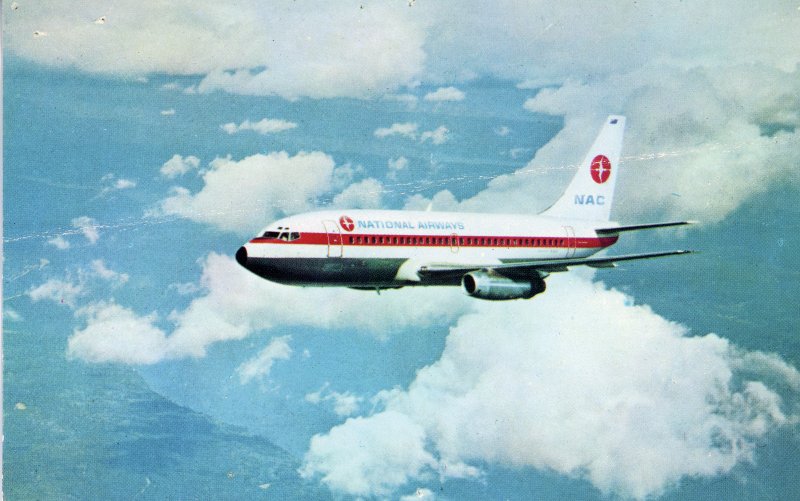
Flight and Descent
The flight had been normal and uneventful for 35 minutes after takeoff from Trivandrum Airport. After receiving clearance from Madras, the aircraft began its descent from a cruising altitude of 27,000 feet.
Explosion and Systems Failure
Shortly after commencing descent, a loud explosion was heard from the forward lavatory area. Smoke filled the cockpit and front portion of the cabin, and the cabin lights went out. The aircraft experienced a complete instrument and electrical failure.
Approach and Landing
With the undercarriage down, the aircraft made a flapless approach and touched down 2,500 feet beyond the threshold of runway 25 at Madras Airport. Due to the high speed of touchdown and the non-availability of reverse thrust and the antiskid system—both consequences of the systems failure caused by the explosion—the aircraft overshot the runway.
Post-Crash Events
The aircraft continued through a kutcha (unpaved) grassy field and a nullah (drain or watercourse) before coming to a halt. Passengers evacuated through the forward and rear doors. After the aircraft stopped, a fire started on the starboard side, damaging the starboard wing. The aircraft was destroyed due to the in-flight explosion and the subsequent post-crash overrun. Fourteen occupants were injured.
Probable Cause
The accident was caused by the detonation of an explosive device in the forward lavatory of the aircraft. The runway overshoot resulted from the high speed of touchdown and the non-availability of reverse thrust and the antiskid system, due to the systems failure consequent on the explosion.