Incident Overview
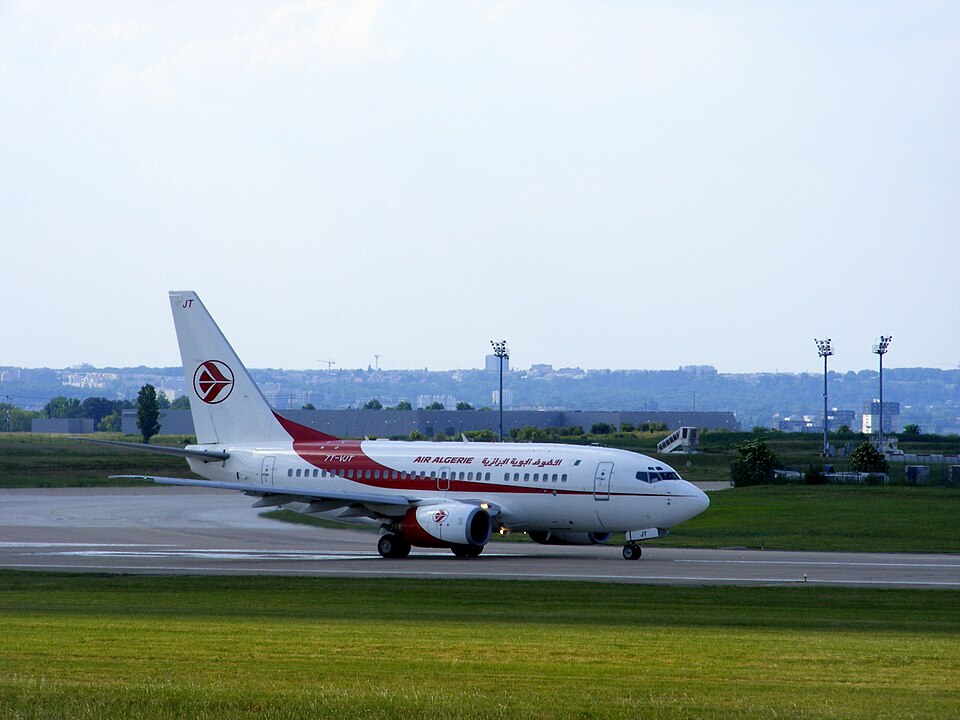
On 31 May 2006, a Boeing 737-600, registration 7T-VJT, operated by an airline on a commercial passenger flight from Algiers, landed on Runway 08R at London Gatwick Airport. After vacating the runway, the crew was instructed to taxi to Stand 43 at the western end of the North Terminal, but received revised instructions to proceed to Stand 19 on the north side of South Terminal Pier 2. The aircraft reached the new stand without difficulty.
Sequence of Events
As the aircraft approached Stand 19, the commander observed that the Azimuth Guidance for Nose-In Stands (AGNIS) system was illuminated. He noted a ground crew member on the right side of the stand centreline and a sign to the right of the AGNIS, which he believed to be a stopping guidance signal (the sign was an extinguished emergency stop sign). He proceeded, expecting a stopping signal. When none was provided, he stopped the aircraft and completed shutdown checks. After the cabin crew opened the main entrance door, it became apparent that the left engine cowling had contacted part of the airbridge. The impact was gentle and no injuries occurred among passengers, crew, or ground staff.
Examination revealed a three-inch diameter hole in the intake lip of the engine cowling and slight deformation of the stand mechanism. The aircraft had overrun the correct stopping point by 10.3 meters.
Ground Staff Actions
A ground crew member (GPUC) arrived at Stand 19 after being informed of the change. He positioned himself ahead and to the right of where he expected the aircraft to stop. He made no attempt to signal the pilots because he did not consider it his responsibility. The traffic officer, who reached the airbridge before the aircraft, lowered the airbridge in preparation. She saw the aircraft continue beyond its normal stopping position and attempted to activate the emergency stop sign but could not find the activation button.
Personnel Information
The GPUC had been employed by the handling agent since March 1999 and had received appropriate training, including marshalling experience. The traffic officer had been employed since November 1997 and had been trained for her duties.
Meteorological Conditions
At the time of the incident, the runway and taxiway surfaces were dry, with visibility exceeding 10 km.
Stand Layout and Guidance Systems
Stand 19 was equipped with AGNIS for centreline guidance and a Parallax Aircraft Parking Aid (PAPA) for stopping guidance. The PAPA was installed approximately 13 meters to the right of the stand centreline but was designed for use from the left pilot seat, requiring the commander to look across the cockpit. The system was serviceable and would have provided correct stopping guidance. The commander later stated it was not apparent that the PAPA referred to Stand 19.
Emergency stopping guidance was available via a red STOP sign adjacent to the AGNIS, activated by a button on a control box at the head of the stand or another on the airbridge. The traffic officer was unaware of the airbridge-mounted activator.
Findings
The commander misunderstood the parking aids and overran the correct stopping point while looking for a positive indication to stop. The emergency stop signal was not activated because confusion existed among ground staff regarding when and how to operate it.
Probable Cause
The commander misunderstood the information provided by the parking aids and overran the correct stopping point whilst looking for a positive indication to stop. The emergency stop signal was not activated by either of the two ground staff present because confusion existed about when and how to operate it.