70 fatalities

1996-10-02: Boeing 757-200 (N52AW) — AeroPeru — Lima, Peru

Lima, PeruFlight

On October 2, 1996, a Boeing 757-200 (registration N52AW) operated by AeroPeru was involved in an aviation accident near Lima, Peru in flight. 70 people were killed. Investigators recorded the probable cause as: The following findings were reported: - It can be deduced from the investigation carried out that the maintenance staff did not remove the protective adhesive tape from the static ports. This summary draws on records from the Bureau of Aircraft Accidents Archives (B3A); 9 related events involving the same aircraft type or operator are linked below.

Sourcesthe Bureau of Aircraft Accidents Archives (B3A)Primary reportUpdated 1781206672Data APIEditorial standards
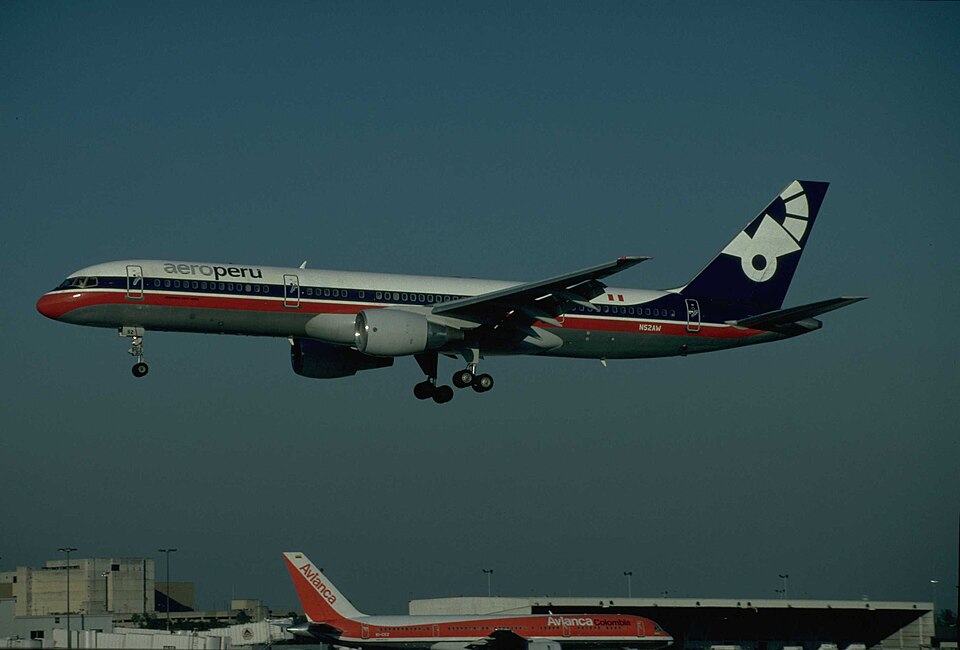
Aircraft registered N52AW
Aircraft registered N52AW. Photo: airlineROVer / CC BY 4.0, via Wikimedia Commons

On an international flight from Lima to Santiago, the crew declared an emergency after altimeter malfunction at takeoff. During return to Lima, the aircraft impacted the sea 48 nm from the airport with total loss of all 70 occupants.

Incident Overview

The aircraft departed Lima-Jorge Chávez Airport at 0042LT on an international regular service to Santiago de Chile, carrying 61 passengers and a crew of nine. During takeoff, when the aircraft reached speed V2 + 10, the crew noticed that the altimeters were not responding and that something irregular was occurring.

Emergency Declaration and Return

The crew decided to notify the control tower in Lima to declare an emergency, consulted Lima for confirmation of their altitude by radar, and requested assistance to return via radar vectors. After 29 minutes of flight, while returning to Lima airport and with the crew attempting to control the aircraft, it impacted with the sea 48 nautical miles from the airport. The impact resulted in the total loss of the aircraft and all of its occupants.

Investigation Findings

The official investigation reported the following findings:

  • It can be deduced from the investigation that the maintenance staff did not remove the protective adhesive tape from the static ports. This tape was not detected during the various phases of the aircraft's release to the line mechanic, its transfer to the passenger boarding apron, and the inspection by the crew responsible for the flight (the walk-around or pre-flight check) carried out by the pilot-in-command.
  • The pilot-in-command made a personal error by not complying with the procedure for GPWS alarms and not noticing the readings of the radio altimeters in order to discard everything which he believed to be fictitious.
  • The copilot made a personal error by not being more insistent, assertive, and convincing in alerting the pilot-in-command much more emphatically to the ground proximity alarms.

Probable cause

The following findings were reported: - It can be deduced from the investigation carried out that the maintenance staff did not remove the protective adhesive tape from the static ports. This tape was not detected during the various phases of the aircraft's release to the line mechanic, its transfer to the passenger boarding apron and, lastly, the inspection by the crew responsible for the flight (the walk-around or pre-flight check), which was carried out by the pilot-in-command, according to the mechanic responsible for the aircraft on the day of the accident. - The pilot-in-command made a personal error by not complying with the procedure for GPWS alarms and not noticing the readings of the radio altimeters in order to discard everything which he believed to be fictitious. - The copilot made a personal error by not being more insistent, assertive and convincing in alerting the pilot-in-command much more emphatically to the ground proximity alarms.