Paraglider Crash in Puente Alto Injures Pilot and Passenger
A SkyWalk Join't 3 paraglider crashed into the ground near Las Vizcachas, Chile, on September 1, 2024. The pilot and passenger sustained serious spinal…
On June 4, 1967, a Canadair C-4 North Star (registration G-ALHG) operated by British Midland International - BMI was involved in an aviation accident near Manchester-Ringway, United Kingdom during landing or approach. 72 people were killed. Investigators recorded the probable cause as: The immediate cause was loss of power of both engines on the starboard side, resulting in control problems that prevented the pilot from maintaining height on the available power with one propeller windmilling. This summary draws on records from the Bureau of Aircraft Accidents Archives (B3A); 5 related events involving the same aircraft type or operator are linked below.
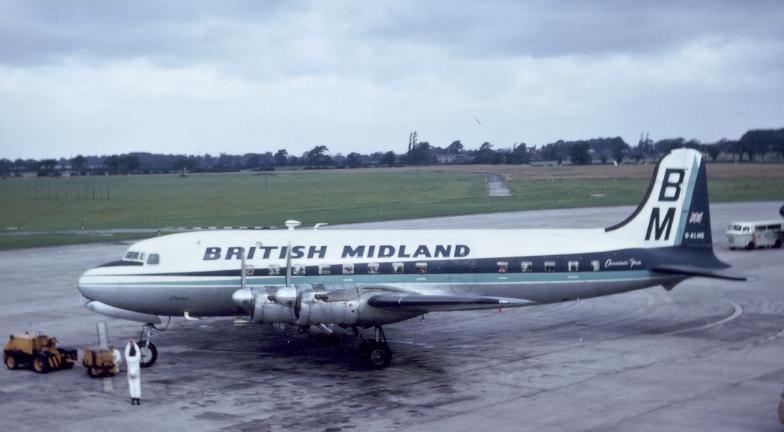
A non-scheduled international flight from Manchester to Palma crashed in Stockport after losing power on both starboard engines during approach, killing 72 people.
The immediate cause was loss of power of both engines on the starboard side, resulting in control problems that prevented the pilot from maintaining height on the available power with one propeller windmilling. The first engine’s loss of power was due to fuel starvation from inadvertent fuel transfer in flight. The second engine’s loss of power was due either to fuel starvation from inadvertent fuel transfer in flight or to misidentification by the crew of which engine had failed, followed by failure to restore power in time to the engine misidentified as having failed. Contributory causes included the design of the fuel valves and the location of their actuating levers in the cockpit, which allowed a small positioning error to cause inadvertent fuel transfer sufficient to empty a tank expected to contain sufficient fuel after a long flight; failure of those responsible for the design of the fuel system or fuel valves to warn users of this risk; failure of British Midland’s air crew or engineers to recognize the possibility of inadvertent fuel transfer in the air from evidence available in previous incidents and fuel logs; and failure of other operators of Argonauts who had learned of the possibility of inadvertent fuel transfer in flight to inform the Air Registration Board, the Directorate of Flight Safety of the Board of Trade or its predecessors, or the United Kingdom Flight Safety Committee of the facts they had learned, so that these might be communicated to other operators of Argonauts and other aircraft equipped with similar systems and fuel cocks.
A SkyWalk Join't 3 paraglider crashed into the ground near Las Vizcachas, Chile, on September 1, 2024. The pilot and passenger sustained serious spinal…
A Cessna 172N struck electrical cables while on final approach to land at Aucó Aerodrome in Chile. The pilot was uninjured, but the aircraft sustained damage…
A Bombardier DHC-8-402 suffered a tail strike during landing at Puerto Williams on September 9, 2024. All 76 occupants were unharmed, but the aircraft…
A MYD JS-MD 3 glider veered off the runway and struck a wall at Vitacura Aerodrome on January 6, 2025. The pilot was uninjured, but the aircraft sustained…
A recreational paraglider flight in Puchuncaví, Chile, ended with the pilot sustaining serious injuries after a rapid descent and impact with a hillside on…
A Tecnam P2006T landed on its belly at an aerodrome in Poland after the crew failed to confirm landing gear deployment. The incident resulted in no injuries…