History of Flight
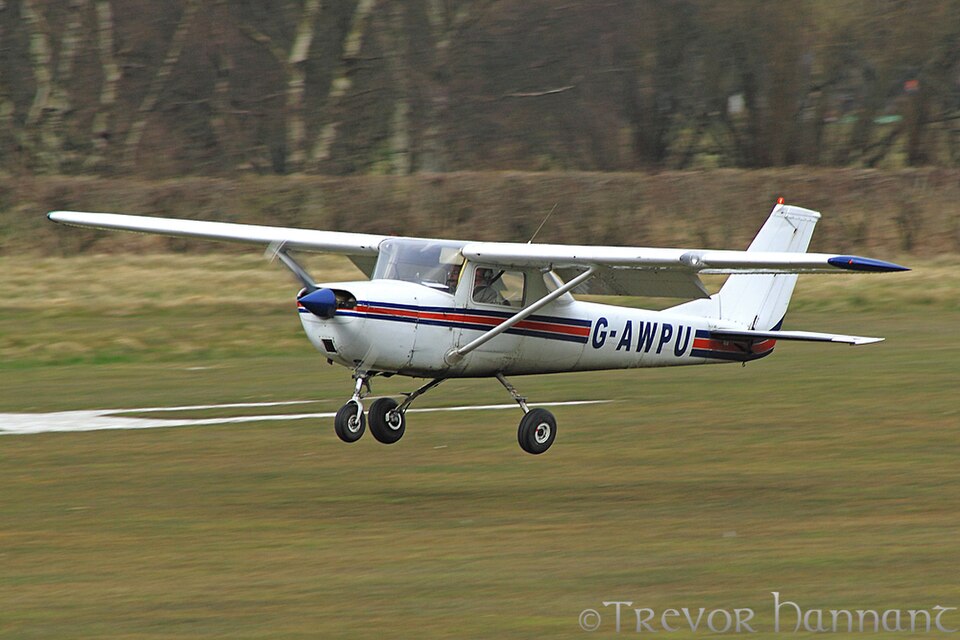
On 10 July 2003, a student pilot flying Cessna 150, registration G-AWPU, departed on a cross-country training flight from Manchester (Barton) Aerodrome. The pilot, who held a student pilot license and had accumulated 37 total flying hours (35 on type), had previously completed two circuits from Runway 20 with an instructor to familiarize himself with the runway. After completing the navigation exercise, he rejoined the right-hand circuit for Runway 20.
On the base leg, the pilot configured the aircraft for landing with flaps set to 20° at an indicated airspeed of 60 knots. During the final approach, flaps were extended to 30° while maintaining 60 knots. The aircraft was aligned with the runway centerline and a normal approach was conducted, with the roundout initiated above the runway threshold.
During the roundout, the aircraft drifted to the left side of the runway, as if affected by a wind from the right. As the aircraft was still over the grass area, the pilot held the nose up and allowed the aircraft to settle onto the grass. The aircraft touched down heavily and bounced approximately two feet into the air. On the subsequent touchdown, the nose landing gear contacted the ground first, bending the nose leg aft. The propeller then struck the ground, causing the engine to stop. The pilot performed the shutdown procedures and exited the aircraft through the normal exit.
Aircraft Information
The aircraft was a Cessna 150, manufactured in 1968, powered by one Continental O-200-A piston engine. The registration was G-AWPU.
Weather
The reported weather at the time of the accident included a surface wind from 210° to 240° at 10 to 15 knots, visibility exceeding 10 km, and no cloud.
Injuries and Damage
The pilot, the sole occupant, was not injured. The aircraft sustained damage including bending of the nose landing gear oleo and propeller damage.
Pilot's Analysis
The pilot concluded that after the bounce he should have applied power and performed a go-around. He also considered that he may not have kept the nose of the aircraft sufficiently high after the bounce, which allowed the nose landing gear to contact the ground first on the second touchdown.