Accident Sequence
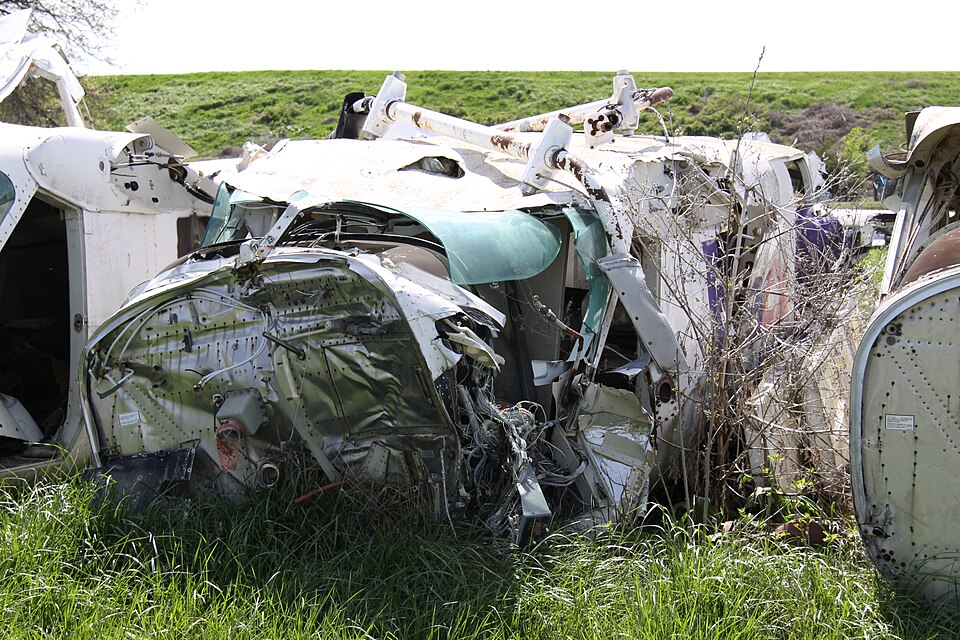
The airplane crashed into a dirt field and a power line after a loss of control that occurred during a simulated engine failure while conducting a Part 135 proficiency check flight. Both pilots sustained serious injuries and were unable to recall any events following the simulated engine failure.
Witness Observations
Witnesses reported seeing the airplane flying on a westerly heading at an altitude between 100 and 200 feet, descending. They heard the sound of an engine surging and observed the wings banking left and right. The airplane continued descending until it impacted the ground and power lines, coming to rest inverted.
Ice Accumulation Evidence
A pilot-rated witness noted approximately ¼ inch of clear and rime ice on the airplane's protected surfaces (deice boots) and about ½ inch of ice on the unprotected surfaces.
Performance Study
An NTSB performance study based on radar data revealed that the airplane entered a descent rate of 1,300 feet per minute (fpm) at about 1,100 feet above ground level. Airspeed decreased from 130 knots to 92 knots over 30 seconds. The descent rate stabilized at 1,300 fpm for 45 seconds before increasing to 2,000 fpm. During the final 45 seconds, true airspeed fluctuated between 88 and 102 knots.
Aircraft Performance Data
According to the aircraft manufacturer, the clean stall speed with flaps up was 78 knots. The Pilot's Operating Handbook (POH) instructed pilots to maintain additional airspeed (10 to 20 KIAS) on approach after encountering light rime ice, to compensate for increased pre-stall buffet and weight. With flaps up, a minimum approach speed of 105 KIAS was recommended. The POH further stated that significantly higher airspeed should be maintained if ½ inch of clear ice had accumulated on the wings.
Probable Cause
The flight crew's failure to cycle the deice boots prior to conducting a simulated forced landing and their failure to maintain adequate airspeed during the maneuver, which resulted in an inadvertent stall and subsequent loss of control. A contributing factor was the ice accumulation on the leading edges of the airfoils.