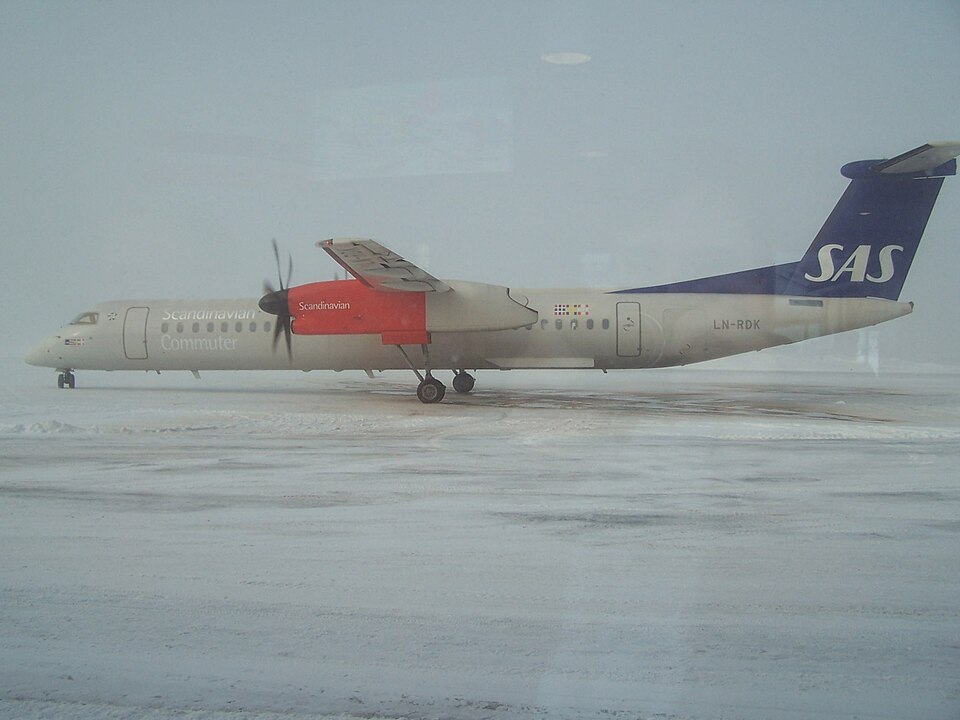
Flight Overview
The accident flight was a scheduled domestic service from Copenhagen Airport, Kastrup (EKCH) to Aalborg Airport (EKYT). The flight proceeded normally until the landing gear was selected down during the approach to runway 26R at Aalborg.
Gear Indication Issue
The nose landing gear and left main landing gear (MLG) indicated down and locked. However, the right MLG showed an "in transit" indication, meaning it was not down and locked. The flight crew informed Aalborg Tower about the problem and initiated a go-around at 1100 feet MSL, climbing to 2000 feet.
Emergency Procedures
The crew consulted the Quick Reference Handbook (QRH) and performed an alternate landing gear extension procedure. The right MLG indication remained in transit. A mayday call was made to Aalborg Tower, and the crew reset the alternate gear extension system, then attempted a normal gear-up selection. The nose gear and left MLG retracted normally, but the right MLG still indicated in transit. A second alternate extension attempt yielded no change. The aircraft entered a holding pattern to reduce fuel and to brief passengers for an emergency landing. Passengers in rows 6, 7, and 8, seats D and F, were relocated away from the right propeller area. During the approach, flaps were set to 10°, and the landing gear warning horn activated, continuing for the remainder of the flight.
Emergency Landing
During the emergency landing, the left MLG touched down first, followed by the right MLG. Shortly after contacting the runway, the right MLG collapsed. The aircraft departed the runway to the right and came to rest at 1357:26 hours on a heading of 340°.
Investigation Findings
The official investigation identified five factors leading to the accident: (1) No specified inspection tasks for the MLG retraction/extension actuator and rod end in the MRB report or Maintenance Requirement Manual for certain checks. (2) The right and left MLG actuators were made of different materials: noble martensitic stainless steel and 4340 steel, respectively. (3) Severe corrosion in the threaded connection between the right MLG actuator rod and rod end. (4) Separation of the right MLG actuator from its piston rod end. (5) Failure of the right MLG stabilizer joint lugs.