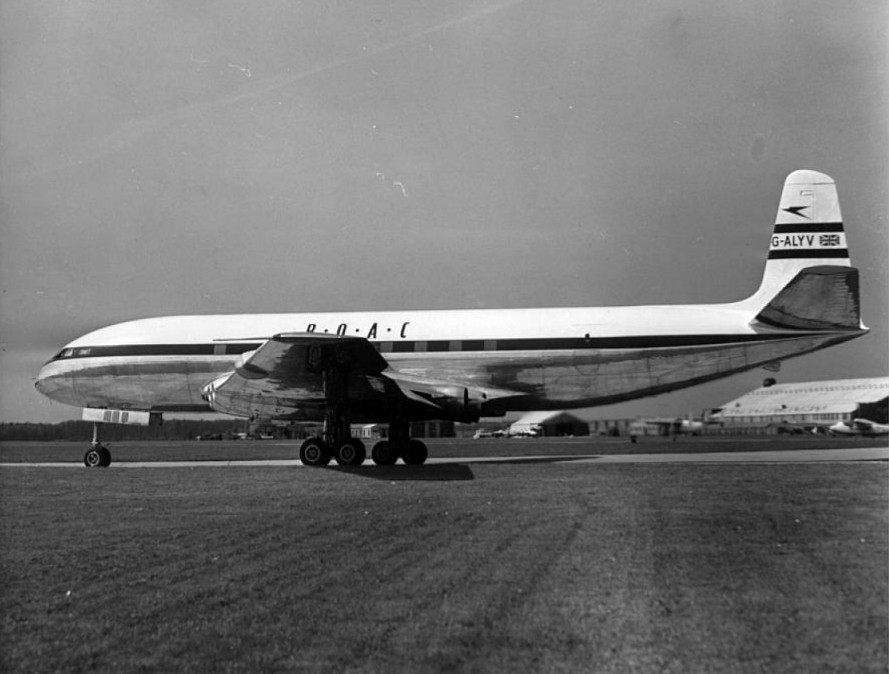
Accident
The aircraft was operating a scheduled return flight from Singapore to London. It departed Calcutta-Dum Dum Airport at 1629 local time, bound for New Delhi-Palam Airport. Six minutes after takeoff, while climbing, the crew encountered poor weather conditions including a thunder-squall. The airplane went out of control, nosed down, and crashed near the village of Jagalgori, approximately 24 miles from Dum Dum Airport. The aircraft disintegrated on impact, and all 43 occupants were killed.
Investigation and Findings
An investigation determined that the accident was caused by structural failure of the airframe during flight through the thunder-squall. According to the official findings, the structural failure resulted from overstressing, which was attributed either to severe gusts encountered in the thunder-squall or to overcontrolling or loss of control by the pilot while flying through the thunderstorm.
The investigation also noted that before departure, the captain was in possession of all relevant meteorological and air traffic control information required for the flight, including a warning of the thunder-squall. The aircraft encountered a norwester squall with thunderstorm shortly after take-off while climbing to its cruising altitude, and suffered structural failure in the air, which caused a fire. An examination of the wreckage did not reveal any signs of sabotage, lightning damage, faulty workmanship, defective material, or power plant failure.