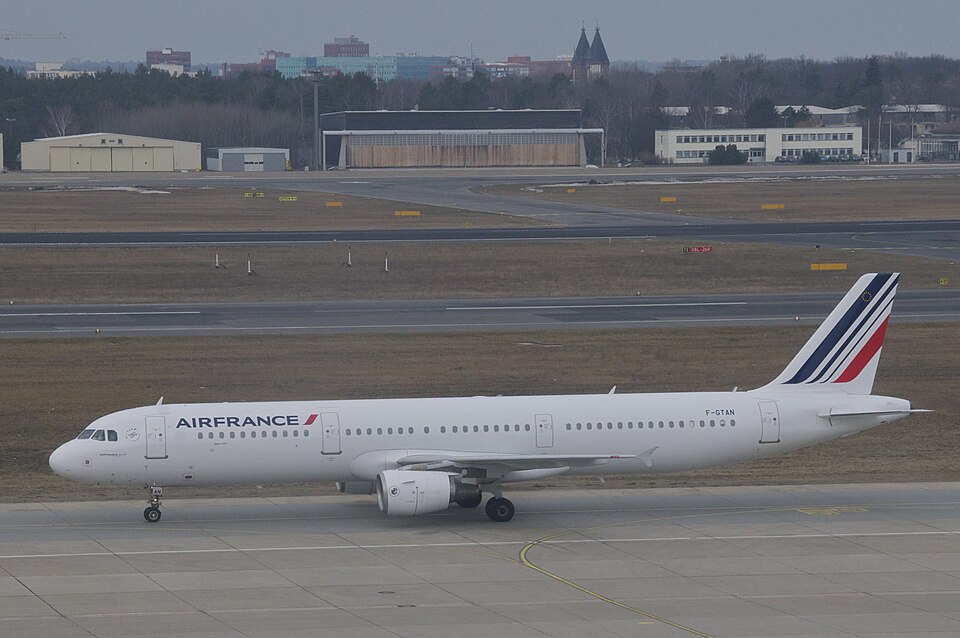
Undetected speed decay triggers high-angle-of-attack protection on Airbus A321

Casualties unknown • FR

An Air France Airbus A321 experienced an unexpected descent and activation of high-angle-of-attack protection after the crew inadvertently entered a mixed autopilot configuration.

What happened

On July 20, 2012, an Airbus A321, registration F-GTAN, operated by Air France, was descending toward Paris Charles de Gaulle. Earlier in the flight, the crew had noted a failure in the SEC1 computer, which required them to avoid using spoilers during the flight.

During the descent, the pilot flying (PF) attempted to increase the rate of descent by moving the thrust levers to IDLE. While this action was intended to accelerate the descent, it inadvertently disconnected the auto-thrust (A/THR) while the autopilot (AP) remained engaged, creating a "mixed" flight control configuration (AP ON A/THR OFF). Because the engines were at idle, the aircraft could not maintain its selected speed of 220 kt.

As the aircraft reached 4,000 ft, the autopilot attempted to maintain altitude by increasing the pitch, which caused the airspeed to decay. Simultaneously, the crew became focused on scanning the external environment for reported conflicting traffic. The airspeed eventually dropped to 177 kt, triggering the Alpha PROT (high-angle-of-attack protection) and disconnecting the autopilot. The aircraft entered a descent of approximately 1,000 ft/min, reaching a minimum altitude of 3,840 ft before the crew applied power and recovered the flight parameters.

The investigation

The BEA examined the crew's management of the auto-thrust system and their coordination during the descent. The investigation focused on why the speed decay went unnoticed and why the crew failed to recognize the activation of the high-angle-of-attack protection. The investigators also reviewed the flight director (FD) commands, which were providing pitch-up instructions that were inconsistent with the need to reduce the angle of attack during a low-speed event.

Findings

  • The crew's decision to move the thrust levers to IDLE caused the unintentional disconnection of the auto-thrust.
  • Poor crew coordination meant the pilot monitoring (PM) was unaware of the change in automation state.
  • The crew's focus on external traffic led to a failure to monitor primary flight parameters, specifically airspeed.
  • The pilot flying prioritized maintaining altitude over airspeed, which inadvertently kept the aircraft within the high-angle-of-attack protection mode.
  • Training and documentation were found to be insufficient regarding the identification of high-angle-of-attack protection when operating in a mixed automation configuration.

Safety action

  • The BEA recommended that EASA and the FAA develop specifications for systems that provide better alerts and protection for low-speed situations across all aircraft phases.
  • A recommendation was made to enhance initial and recurrent training regarding low-speed flight and the identification of high-angle-of-attack protection.
  • The BEA recommended that EASA and manufacturers reconsider the logic of flight director displays to ensure they provide relevant instructions or disappear when the autopilot disconnects involuntarily.

Probable cause

The incident was caused by the pilot's decision to disconnect the auto-thrust to increase descent rate, leading to a mixed automation state where speed was not manually managed. This, combined with a lack of crew coordination and a focus on external traffic, resulted in an undetected airspeed decay and the subsequent activation of high-angle-of-attack protection.

All Airbus A321-200 accidents →

Frequently asked questions

What happened in the 2012-07-20 Airbus A321 accident near FR?

An Air France Airbus A321 experienced an unexpected descent and activation of high-angle-of-attack protection after the crew inadvertently entered a mixed autopilot configuration.

What aircraft was involved and where did it happen?

The accident on 2012-07-20 involved a Airbus A321, registration F-GTAN, at FR.

What was the probable cause of the accident?

The incident was caused by the pilot's decision to disconnect the auto-thrust to increase descent rate, leading to a mixed automation state where speed was not manually managed. This, combined with a lack of crew coordination and a focus on external traffic, resulted in an undetected airspeed decay and the subsequent…

Loading the flight search…

What you can do on Flight Finder

  • Search flights between any two airports with live fares.
  • By aircraft — pick a plane model (e.g. Boeing 787, Airbus A350) and see every route it flies from your origin.
  • Route map — click any airport worldwide to explore its destinations, or draw a radius to find nearby airports.
  • Global aviation safety — aviation accident database, 40,000+ records since 1980, with map and rankings by aircraft and operator.
  • NTSB safety feed — recent U.S. aviation accidents and incidents from the official NTSB CAROL database, updated daily.