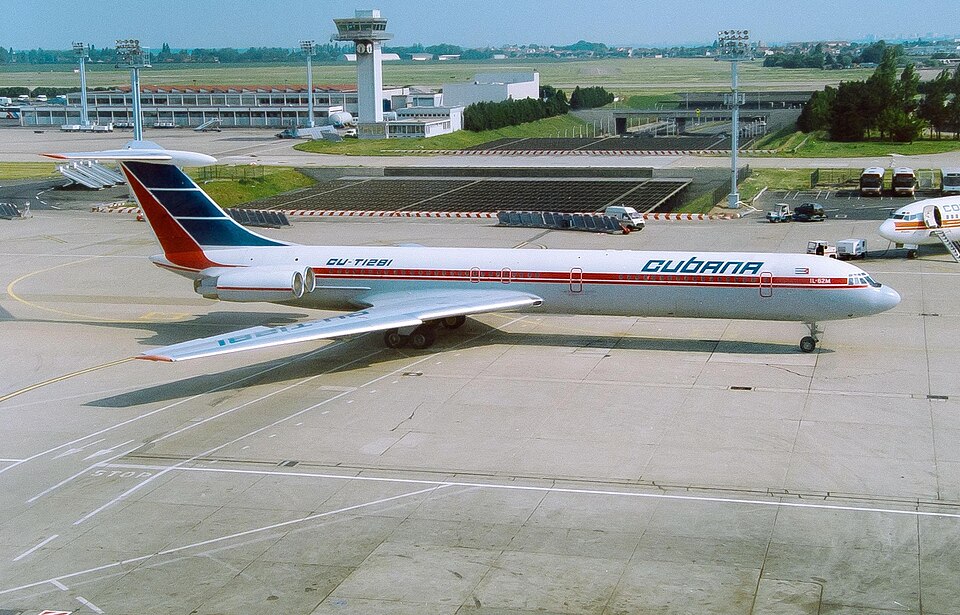
Accident Overview
On an unspecified date, Flight CU9646, a charter flight from Havana to Milan with an intermediate stop in Cologne, carrying Italian tourists, crashed shortly after takeoff from runway 05 at Havana airport. The aircraft disintegrated upon impact in a residential area, destroying several houses and buildings.
Sequence of Events
Approximately one hour before takeoff, a low pressure zone was located about nine kilometers from the airport, with winds up to 40 km/h. The wind force increased during the last minutes prior to takeoff, and the captain decided to take off despite unsafe conditions. After takeoff, the crew raised the landing gear and selected flaps from 30° to 15°. The aircraft encountered difficulties gaining height, struck elements of the ILS antenna located 220 meters past the runway end, then struck a hill and crashed in a residential area.
Casualties
Among the 126 occupants, a 22-year-old man was seriously injured, while all 125 other occupants were killed. Additionally, 45 people on the ground were killed, and at least 59 people on the ground were injured. Eight days after the accident, the only survivor died from his injuries.
Weather Conditions
It was determined that at the time of the accident, wind was gusting up to 100 km/h with downdrafts and windshear located in the climb path.
Investigation Findings
The official investigation determined the probable cause as a combination of two factors: the existence of an adverse atmospheric phenomenon of windshear at low altitude, of which the captain did not know, and an unwise decision by the pilot in command to not postpone the takeoff given the existing weather conditions near the airfield.