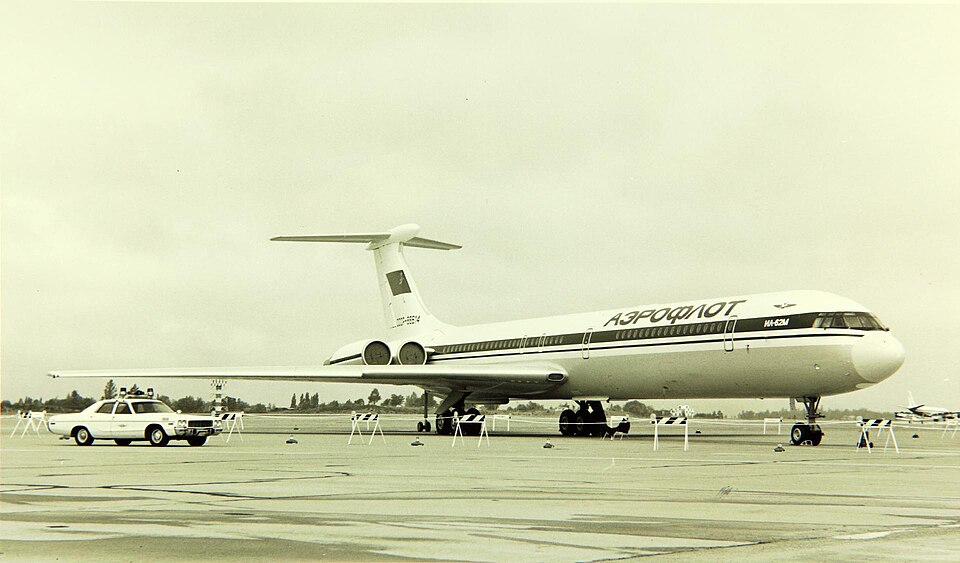
Approach and Descent
A flight from Lisbon began its descent to Havana-Jose Martí-Rancho Boyeros Airport and was cleared for an approach to runway 05. The crew encountered poor visibility due to foggy conditions. The aircraft turned onto runway heading at a distance of 9 km from the threshold, whereas the approach procedure required this turn at 14–15 km. The captain continued the descent without having the runway in sight, passing below the decision height.
Impact with Obstacles
At a distance of 1,820 meters from the runway threshold, the aircraft was traveling at 280 km/h at a height of 23–25 meters when it struck power cables. The impact caused the elevators to separate and tore off the right-wing flaps. The airplane then struck 22 palm trees and continued descending until it crashed in flames 1,270 meters short of the runway and 121 meters to the right of its extended centerline.
Injuries and Fatalities
Two passengers were seriously injured, while 67 other occupants were killed.
Official Probable Cause
The accident was the consequence of several errors by the flying crew. The approach configuration was wrong: the final approach was initiated too late (9 km instead of 15 km), and the crew continued the descent below the glide path due to an incorrect altimeter setting. At the time of the accident, visibility was below minimums because of foggy conditions, and the crew failed to take corrective actions and to properly monitor the radio altimeter, causing the airplane to descend until it impacted with trees and the ground.