What happened
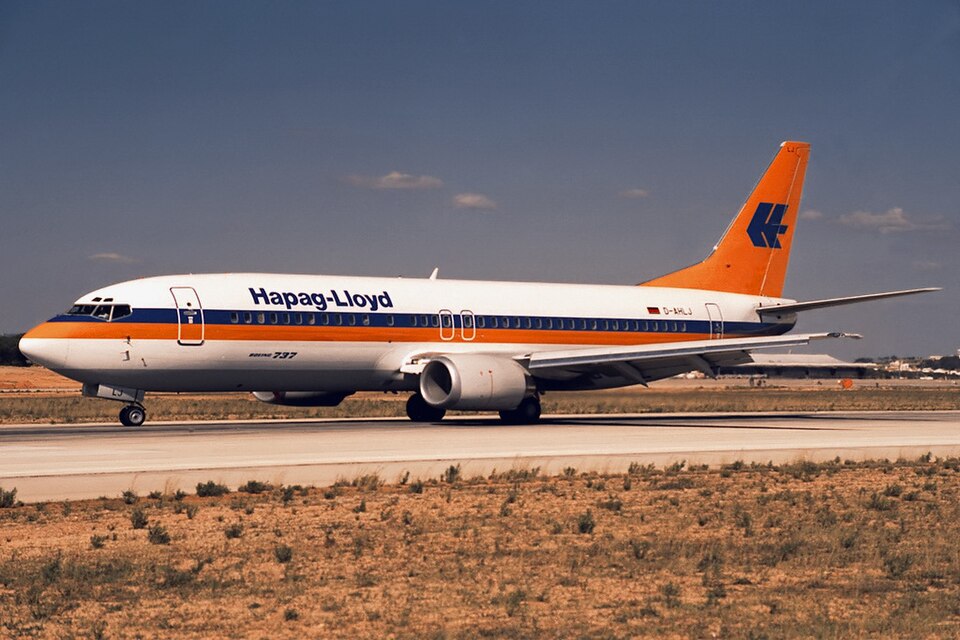
On January 6, 2002, a Hapag Lloyd Boeing 737-400, registration D-AHLJ, was performing a non-scheduled international passenger flight from Amsterdam to Fuerteventura. The aircraft was carrying 82 passengers and 6 crew members when it encountered extreme meteorological conditions caused by a massive dust storm originating from the Sahara Desert. The storm significantly reduced horizontal visibility to 500 meters and made vertical visibility indeterminate.
The flight crew attempted a non-precision VOR-DME approach to runway 19. The first approach was unsuccessful, resulting in a go-around after the aircraft descended below the minimum descent altitude (MDA) without visual contact with the runway. During the second approach, the crew continued the descent under instrument meteorological conditions (IMC) despite not meeting the necessary visual requirements.
As the aircraft approached the runway, the crew performed aggressive maneuvers to correct for heading and vertical speed deviations. The aircraft touched down with a high rate of descent and a significant bank angle. The impact caused the main landing gear struts to twist, leading to the bursting of two main tires and damage to the landing gear components, including hydraulic lines and the torque link strut lug. The aircraft slid along the runway, coming to a halt approximately 1,200 meters from the threshold. There were no injuries to the 82 passengers or 6 crew members.
The investigation
The CIAIAC investigation examined flight data from the Digital Flight Data Recorder (DFDR) and Cockpit Voice Recorder (CVR), as well as meteorological reports and airport records. The investigation focused on the flight crew's adherence to non-precision approach procedures and the impact of the dust storm on visibility and aircraft control. Investigators analyzed the aircraft's descent profile, noting that the rate of descent exceeded 1,000 feet per minute in the final seconds of the approach and that the aircraft's bank angle was influenced by pilot control inputs rather than wind gusts alone.
Findings
- The flight crew continued the descent below the MDA under IMC without meeting the required visual contact criteria.
- The crew failed to maintain a stabilized approach, characterized by high rates of descent and uncorrected heading deviations.
- Severe weather conditions, specifically a Saharan dust storm, significantly impaired visibility and flight stability.
- The co-pilot failed to perform standard call-outs regarding minimum altitudes and speed deviations.
- The aircraft's landing gear sustained damage due to a hard landing and the torsion stresses caused by the struts twisting upon impact.
- The crew did not apply appropriate speed corrections for the prevailing headwinds and gusts.