History of the Flight
On Saturday, 17 February 2024, an Airbus A321 aircraft with registration D-AISO, operating as flight LH77X, took off from Frankfurt Airport (EDDF) in Germany for a flight to Seville Airport (LEZL) in Spain. The captain was the pilot monitoring and the co-pilot was the pilot flying. This was the fourth day of a four-day rotation for the flight crew. During the previous three days, the captain observed that the co-pilot carried out his duties according to company standard operating procedures and displayed a consistently high level of motivation.
At 10:31 UTC, when the aircraft was en route, the captain left the flight deck and went to the forward lavatory. Before leaving, the captain and co-pilot had a conversation about weather conditions and aircraft operation; the captain noted that the co-pilot appeared able and alert at that time.
When the captain returned from the lavatory at 10:39 UTC, he used the standard entry procedure to access the flight deck. He was unsuccessful and tried again, assuming he might have entered the code incorrectly or that the co-pilot was busy with flight duties. After three further attempts, a cabin crew member made an intercom call to the flight deck with no response. The captain then used the emergency access code. Before the emergency code timer expired, the co-pilot manually opened the flight deck door from inside.
The captain took control of the aircraft at 10:42 UTC. Observing that the co-pilot was pale, sweating, and moving strangely, the captain called for cabin crew assistance. First aid was provided by the crew and a doctor who was traveling as a passenger; the doctor diagnosed a possible heart condition.
Injuries and Damage
No injuries to persons are reported in the source. The aircraft landed safely and no damage is mentioned.
Aircraft Information
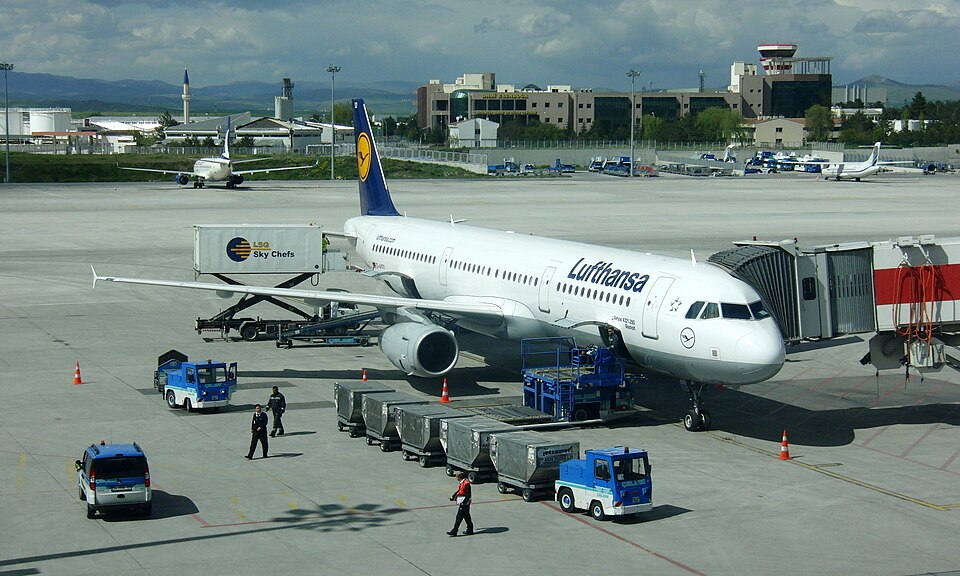
The aircraft was an Airbus A321, registration D-AISO, operated by Lufthansa. It carried 205 persons on board: 6 crew members and 199 passengers.
Medical and Pathological Information
The co-pilot suffered a sudden and severe incapacitation while alone on the flight deck. The investigation concluded that the cause of the incapacitation was the manifestation of a symptom of a condition that had not previously been detected by the pilot himself or during aeronautical medical examinations.
Outcome
The captain decided to divert to Adolfo Suárez Madrid-Barajas Airport (LEMD), where the aircraft landed safely. The co-pilot was taken to hospital.
The incident highlighted the benefit of having another authorized person on the flight deck when one of the two pilots leaves for physiological or operational reasons. As a result, a safety recommendation was issued to the European Union Aviation Safety Agency (EASA).