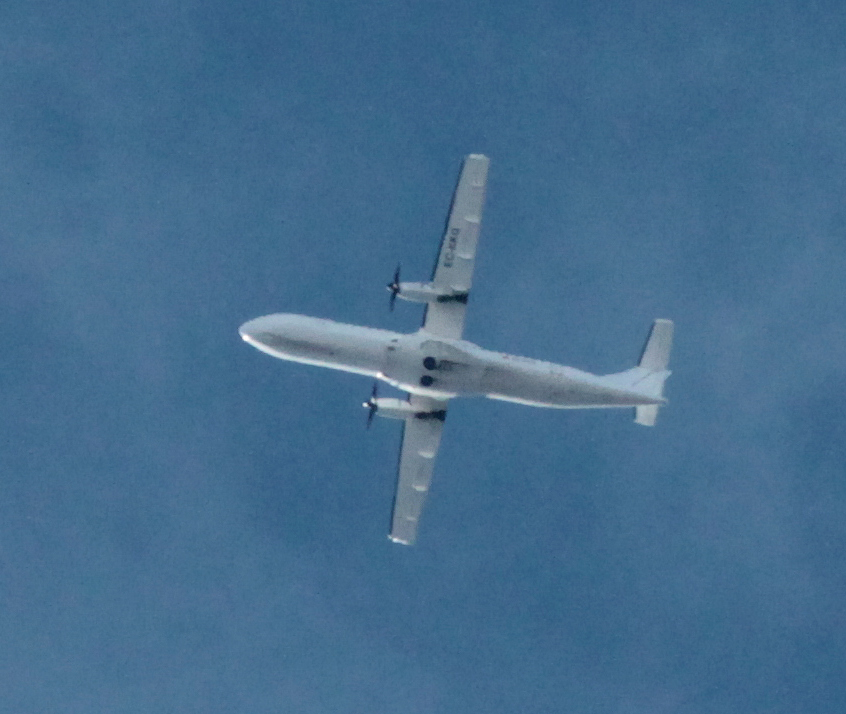
Flight Crew Errors Lead to Stall in Icing Conditions for Swiftair ATR 72

Casualties unknown • FL 170 entre Alicante y Madrid (Albacete), ES

An ATR 72-212A experienced an uncommanded loss of altitude and a stall while climbing through icing conditions due to improper automation use and flight management.

What happened

On September 9, 2017, an ATR 72-212A, registration EC-KKQ, operated by Swiftair, was performing a scheduled domestic flight from Alicante to Madrid. During the climb phase, the aircraft encountered icing conditions. After approximately eight minutes of flight in icing, the aircraft suffered an uncommand and loss of altitude of 1,661 feet over a period of 33 seconds, accompanied by significant uncommanded pitches and banks.

During the event, the aircraft reached a minimum speed of 151 kt, with a maximum angle of attack of 19.6 degrees. The stall began with the left wing, resulting in bank angles of up to 58 degrees left and 39 degrees right. Following the stall, the crew continued the flight to Madrid, where the aircraft performed an unstabilized, high-speed approach and landed on the first third of the runway without flaps. There were no injuries among the 26 persons on board.

The investigation

The CIAIAC investigation examined the flight data, cockpit voice recorder, and crew training records. The investigation focused on the crew's management of the climb, the activation of anti-icing systems, and the response to the stall. The investigators also reviewed the aircraft's performance monitoring (APM) system and the crew's adherence to standard operating procedures during both the icing encounter and the subsequent emergency landing.

Findings

  • The crew failed to use the recommended IAS (speed) mode during the climb, instead utilizing autopilot PITCH mode despite the presence of icing.
  • There was a two-unminute delay in activating the anti-icing systems once icing conditions were identified.
  • The crew selected the VS (vertical speed) mode to climb through clouds, a maneuver that is prohibited in icing conditions.
  • The improper use of automation and a failure to follow procedures when the degraded performance caution was triggered contributed to the loss of control.
  • The captain's manual inputs during the stall recovery occasionally countered the activation of the stick pusher.
  • During the landing phase, the crew failed to complete necessary checklists and did not properly coordinate with the cabin crew regarding the emergency.
  • The aircraft's APM system did not generate an "INCREASE SPEED" caution because the correct weight had not been entered into the system.

Probable cause

The probable cause of the loss of control was deficient flight management by the crew and the inappropriate use of autopilot automation while operating in icing conditions.

Frequently asked questions

What happened in the 2017-09-09 ATR-72-212A accident near FL 170 entre Alicante y Madrid (Albacete), ES?

An ATR 72-212A experienced an uncommanded loss of altitude and a stall while climbing through icing conditions due to improper automation use and flight management.

What aircraft was involved and where did it happen?

The accident on 2017-09-09 involved a ATR-72-212A, registration EC-KKQ, at FL 170 entre Alicante y Madrid (Albacete), ES.

What was the probable cause of the accident?

The probable cause of the loss of control was deficient flight management by the crew and the inappropriate use of autopilot automation while operating in icing conditions.

Loading the flight search…