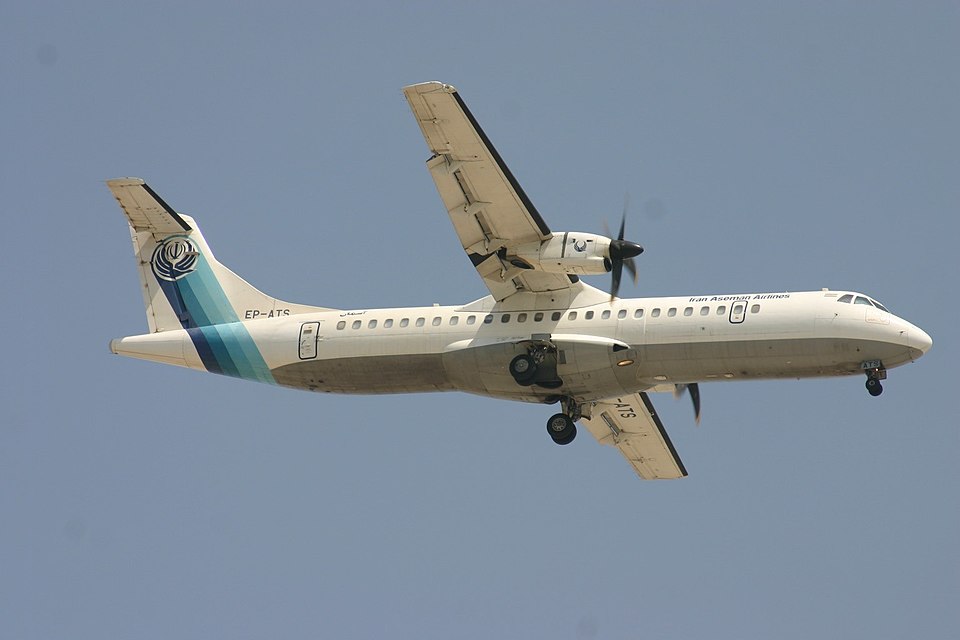
Flight Details
An Iran Aseman Airlines ATR72, registered EP-ATS, was operating a scheduled domestic passenger flight from Tehran Mehrabad International Airport to Yasuj. The aircraft departed at 04:35 UTC (08:05 local time) on the first flight of the day for both the crew and the aircraft. The cruise segment was conducted at flight level 210 (FL210) on airway W144, with no abnormal situations reported by the crew.
Accident Sequence
During the flight, the first officer requested the latest weather information for the destination from Yasuj tower and subsequently requested clearance from Tehran Area Control Centre (ACC) to descend from FL210 to FL170. While descending towards FL170 and making contact with Yasuj tower, the aircraft continued its descent to 15,000 feet. The crew received approval to join overhead the airport and perform a circling NDB approach for landing on runway 31.
At 06:01 UTC, the aircraft collided with a peak on the lee side of the DENA Mountains, approximately 8.5 nautical miles north of the airport, at an altitude of around 13,300 feet. The collision completely destroyed the aircraft.
Probable Cause
The official investigation determined that the accident occurred due to a chain of causes, with human factors playing a primary role. The cockpit crew's actions created dangerous conditions, considered the main cause. Identified crew errors included continuing the approach to Yasuj airport contrary to the company's operations manual due to low cloud ceiling, descending below the minimum safe altitude and route minimums, inadequate crew resource management (CRM), failure to complete stall recovery procedures (including flap setting and maximum RPM), inappropriate use of the autopilot after a stall, insufficient anticipation of adverse weather (clouds, turbulence, icing), rapid deactivation of the anti-ice system and angle of attack (AOA) sensor, and failure to adhere to checklists and standard callouts by both pilots.
Contributing factors cited the airline's inability to detect systematic deficiencies in crew training regarding meteorology, operations manuals, and standard operating procedures; lack of operational supervision of pilot behavior; absence of a SIGMET warning about mountain wave or severe mountain wave; unclear stall recovery procedures in the flight crew operating manual; lack of warnings about mountain wave in aircraft manuals; and absence of an aircraft performance monitoring system to alert the crew to performance degradation.
Other deficiencies noted included issues with airworthiness directive compliance and monitoring, the effect of sanctions on aviation safety, non-standard air traffic control communication, unclear definitions of fully qualified pilot and copilot in regulations, weather forecast compliance with Annex 3, search and rescue coordination with local authorities, and incorrect time setting on the flight data recorder.