History of the Flight
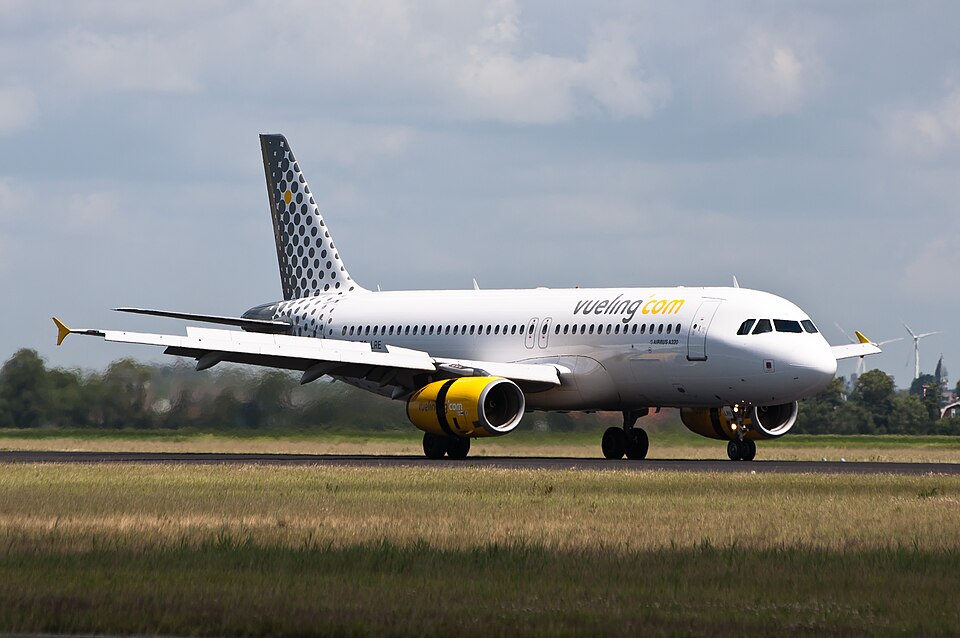
On 25 July 2016, an Airbus A321-212, registration HB-ION, operated by Swiss with callsign SWR191Q, took off from Barcelona Airport en route to Zurich Airport. Simultaneously, an Airbus A320-232, registration EC-LRE, operated by Vueling with callsign VLG6502, was flying from Barcelona to Naples Capodichino Airport. The Swiss aircraft was following standard instrument departure DALIN3Q, while the Vueling aircraft was following VERSO3Q. The incident occurred in the vicinity of point NITBA in the Barcelona Terminal Maneuvering Area (TMA).
Injuries and Damage
The report states that there were no injuries to any persons onboard either aircraft. The flight crew of SWR191Q consisted of 2 pilots and 6 flight attendants, with 203 passengers; the crew of VLG6502 had 2 pilots and 4 flight attendants, with 151 passengers. No damage to either aircraft was reported.
Conflict and Resolution
The conflict arose when SWR191Q climbed at a rate higher than expected by the air traffic controller. The planning controller for Barcelona sector T3W failed to adequately monitor the situation, preventing timely detection of the conflict. As a result, the separation between the two aircraft reduced to less than the required minimum. The Traffic Collision Avoidance System (TCAS) on both aircraft issued a Traffic Advisory (TA) followed by a Resolution Advisory (RA). The flight crews responded to the RA, and the aircraft safely diverged. The Short-Term Conflict Alert (STCA) also activated.
Controller and Crew Statements
According to statements in the report, the executive controller for Barcelona sector T3W noted that the conflict was not detected early enough. The planning controller acknowledged a lapse in duty performance. The crew of VLG6502 stated that they received a TCAS RA and followed the vertical guidance. The crew of SWR191Q also reported responding to the RA.
Measures Taken
Following the incident, ENAIRE, the Spanish air navigation service provider, implemented measures to improve conflict detection and controller coordination. The investigation did not find any mechanical or system failures contributing to the event.