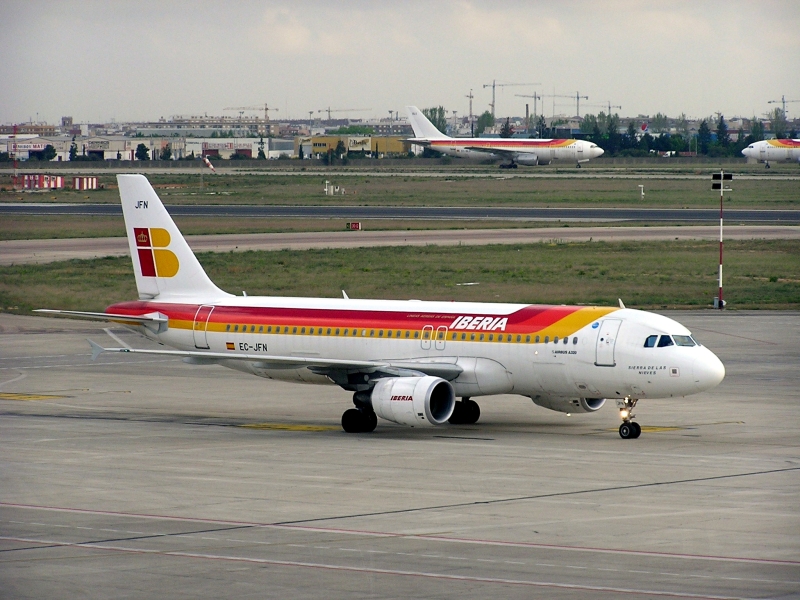
Smoke and burning smell in cockpit of Airbus A320 during ascent

Casualties unknown • Aeropuerto de Madrid-Barajas (Madrid), ES

An Airbus A320 experienced smoke in the cockpit and passenger cabin during ascent from Madrid, leading to an emergency return to the airport.

What happened

On 3 July 2018, an Airbus A320-214, registration EC-JFN, operated by Iberia, departed from Adolfo Suárez Madrid-Barajas Airport (LEMD) bound for Brussels. During the initial ascent, at approximately 3,500 feet, the flight crew noticed an intense burning smell and smoke entering the cockpit through the air conditioning vents.

As the aircraft continued to climb, the smoke became denser and began to filter into the passenger cabin. The captain declared a MAYDAY and instructed the co-pilot to don oxygen masks while initiating the Quick Reference Handbook (QRH) procedures for smoke and fumes. The crew leveled the aircraft at approximately 7,000 feet and requested a return to Madrid.

While the smoke eventually dissipated within minutes, the burning odor persisted. The aircraft landed safely at LEMD without further incident. There were no injuries among the 168 passengers and 6 crew members on board. Following the landing, a maintenance technician identified a hydraulic fluid leak in one of the engines.

The investigation

The CIAIAC investigation focused on the source of the smoke and the maintenance history of the aircraft. The investigation noted that this was the first flight for the aircraft following the replacement of engine #2, which had been previously damaged by bird ingestion.

Investigators examined the aircraft's maintenance records, specifically looking at tasks performed after the engine replacement, including the installation of a new engine and a hydraulic pump. The investigation also reviewed the flight recorders and the crew's management of the emergency, noting that the crew followed the appropriate emergency protocols and successfully landed the aircraft.

Findings

  • The smoke and odor were caused by the contamination of the bleed air from engine 1.
  • The air was likely contaminated by the combustion of residues, including grease, oil, and bird remains, which had not been removed during maintenance following a previous bird ingestion event.
  • Residual oil spills from prior maintenance procedures may have also contributed to the event.
  • A hydraulic fluid leak was confirmed in one of the engines during post-flight inspection.

Probable cause

The incident was caused by inadequate maintenance practices following a bird strike, which left organic debris and oil residues in the engine air path, subsequently burning and entering the cabin via the air conditioning system.

All Airbus A320-200 accidents →

Frequently asked questions

What happened in the 2018-07-03 Airbus A320 accident near Aeropuerto de Madrid-Barajas (Madrid), ES?

An Airbus A320 experienced smoke in the cockpit and passenger cabin during ascent from Madrid, leading to an emergency return to the airport.

What aircraft was involved and where did it happen?

The accident on 2018-07-03 involved a Airbus A320, registration EC-JFN, at Aeropuerto de Madrid-Barajas (Madrid), ES.

What was the probable cause of the accident?

The incident was caused by inadequate maintenance practices following a bird strike, which left organic debris and oil residues in the engine air path, subsequently burning and entering the cabin via the air conditioning system.

Loading the flight search…