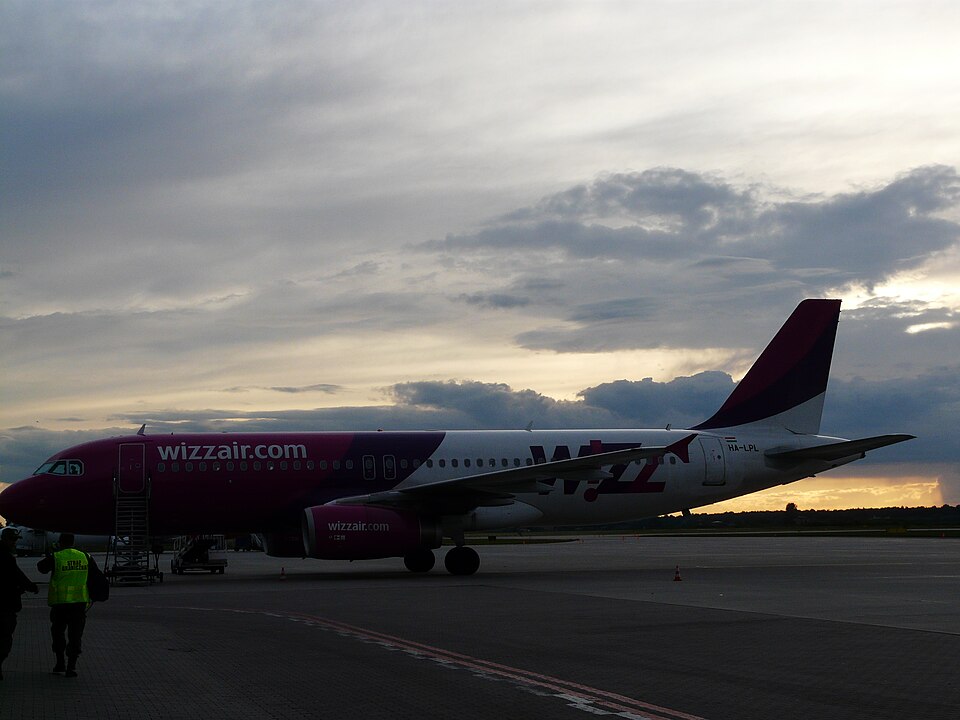
Incident Overview
On 24 September 2014, at 17:06 UTC, an incident involving two Airbus A320 aircraft occurred in the Barcelona Terminal Manoeuvring Area (TMA). The aircraft were operating as Wizz Air flight WZZ951 (registration HA-LPL) and a Vueling flight (registration EC-LZF). All 154 occupants on HA-LPL and 171 on EC-LZF were uninjured.
Aircraft and Flight Information
Wizz Air flight WZZ951, an Airbus A320 registered HA-LPL, was operating a scheduled international passenger flight from Poznan Airport (EPPO) to Barcelona Airport (LEBL). Vueling flight, an Airbus A320 registered EC-LZF, had departed from Barcelona en route to Amsterdam Schiphol Airport. Both aircraft were following standard instrument procedures: HA-LPL was on the BISBA4S arrival route, while EC-LZF was on the OKABI2R departure route. These routes intersect northeast of the Sabadell VOR (SLL).
Sequence of Events
As the aircraft converged, the separation between them decreased to a minimum of 1.3 nautical miles horizontally and 400 feet vertically. The executive air traffic controller instructed the crew of HA-LPL to turn left and proceed direct to the Sabadell VOR in order to achieve separation. During the event, no TCAS resolution advisory (RA) was generated, but a traffic advisory (TA) did occur. Both flights subsequently continued to their destinations without further incident.
Investigation and Findings
The investigation, conducted by the Spanish Civil Aviation Accident and Incident Investigation Commission (CIAIAC), determined that the cause of the incident was the controller's lack of adherence to standard phraseology when issuing the maneuver instruction. Specifically, the wording used led the crew of WZZ951 to understand that they should execute the turn immediately rather than upon reaching the DVOR/DME at SLL.
Two contributing factors were identified: first, a deficiency in the ATC controller's perception and monitoring, as the discrepancy between the readback and the issued instruction was not detected. Second, once the situation was recognized, the executive controller did not provide timely instructions to avoid or mitigate the conflict, but instead insisted on the previously given instruction.
Probable Cause
The probable cause, as stated by the investigation, was the lack of adherence to standard phraseology by the ATC controller regarding maneuver instructions, which caused the WZZ951 crew to misunderstand the timing of the required turn.