Flight Information
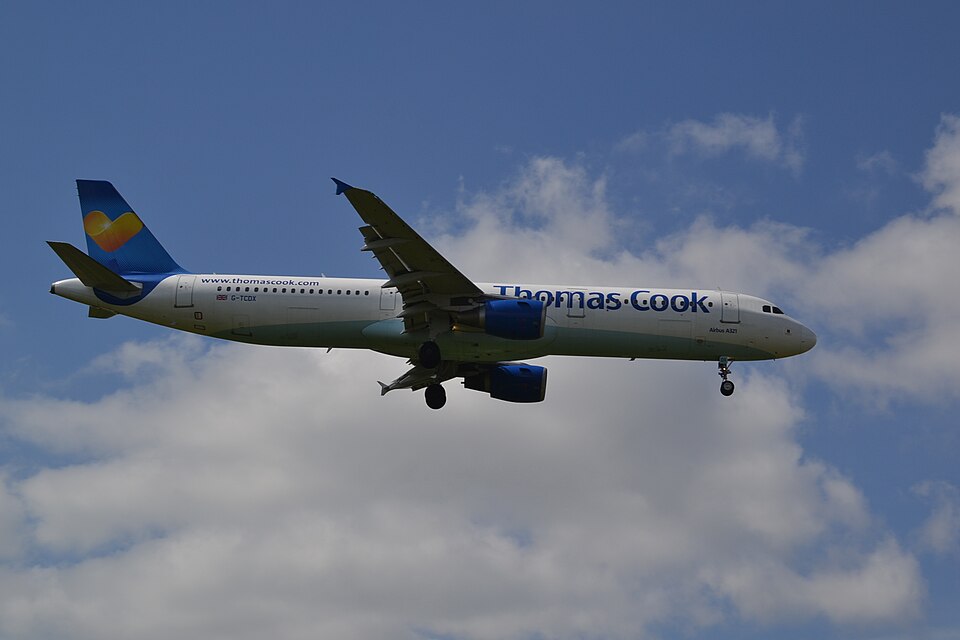
An Airbus A321-211, registration G-TCDX, was operating Thomas Cook Airlines flight TCX56CP from Norwich Airport (EGSH), United Kingdom, to Palma de Mallorca Airport (LEPA), Spain. The flight plan listed Ibiza Airport (LEIB) and Menorca Airport (LEMH) as alternate airports. The aircraft carried 8 crew and 178 passengers. No injuries were reported.
Weather and Approach
The weather forecast for the Balearic Islands included yellow alerts due to a 40 to 70% chance of rain and storms on the island of Mallorca between 15:00 and 19:00 UTC. The terminal aerodrome forecast (TAF) for Palma de Mallorca called for temporary storm clouds with a base at 2500 ft between 11:00 and 19:00, and a moderate chance of temporary storms and precipitation between 12:00 and 17:00, with storm clouds at 2000 ft.
Faced with the possibility of unfavorable weather at Palma de Mallorca and Ibiza, the crew loaded 600 kg of extra fuel beyond the operational flight plan. The aircraft was in the approach sequence to runway 06L at Palma de Mallorca between 14:30 and 15:00, a period during which five special aerodrome reports (SPECI) were issued indicating storms and reduced visibility. In these conditions, five aircraft in the sequence executed go-arounds, the second of which was the incident aircraft.
After receiving information that one aircraft had landed, the crew decided to make a second approach to runway 06L. Subsequently, they were informed of windshear and worsening weather conditions, prompting the crew to request a diversion to Menorca Airport, which air traffic control facilitated immediately.
Diversion
While en route to Menorca Airport, the crew observed that with the remaining fuel, the aircraft would land with less than the final reserve fuel. The aircraft landed safely at Menorca Airport. No further details about the landing fuel quantity or the outcome of the diversion were specified in the source.