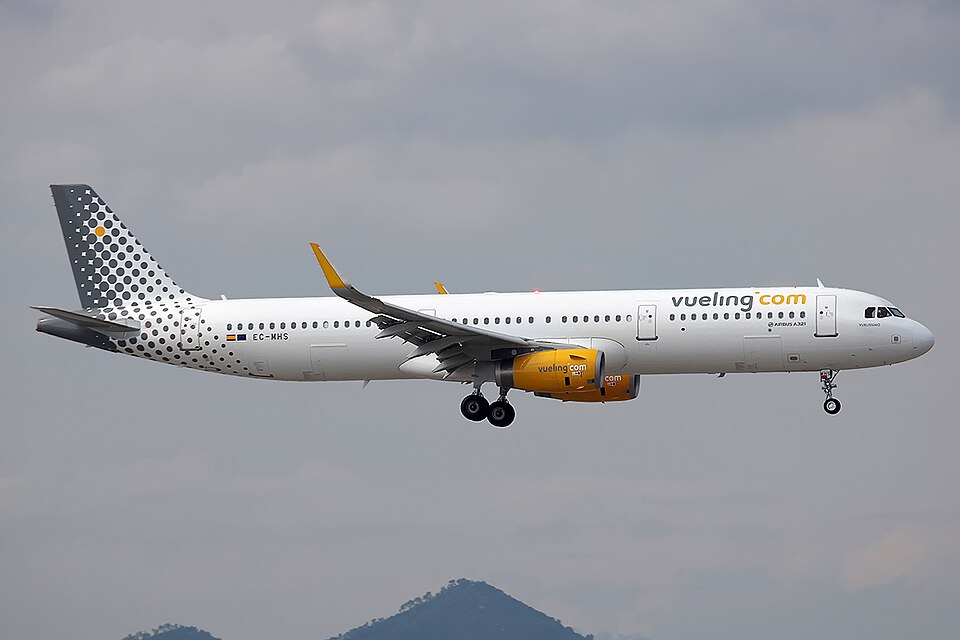
What happened
On 7 August 2016, at approximately 09:17 UTC, a loss of separation occurred between an Airbus A321-231, registration EC-MHS, operated by Vueling Airlines, and an Airbus A320-214, registration G-EZTF, operated by Easyjet Airline Company LTD. The incident took place in the vicinity of the ASTEK intermediate approach fix for runway 07L at Barcelona-El Prat Airport.
The EC-MHS was performing a domestic flight from Gran Canaria, maneuvering from the right of the localizer course, while the G-EZTF was on an international flight from London-Gatwick, maneuvering from the left. Both aircraft were at an altitude of 5,000 feet when the conflict occurred. The crews of both aircraft successfully responded to instructions from the Traffic Collision Avoidance System (TCAS) to resolve the conflict, and no injuries were reported among the passengers or crew.
The investigation
The CIAIAC investigation examined the actions of the air traffic control personnel, the use of the Arrival Manager (AMAN) tool, and the coordination between different sectors of the Barcelona Approach Control. The investigation reviewed the flight recorder data from both aircraft and analyzed the workload and procedures of the controllers involved.
Investigators found that the Queue Manager (QM) had modified the arrival sequence on multiple occasions. While these changes were coordinated with Sector T4, they were not coordinated with Sector T3. Furthermore, the executive controller in Sector T3 noticed the change in sequence but did not receive a reply when inquiring about it. Consequently, the Sector T3 controller instructed the EC-MHS to begin its approach and assigned an altitude that deviated from standard operating procedures.
On the Final approach sector, the controller had inserted departing heavy aircraft into the sequence and failed to provide sufficient traffic information to the arriving aircraft. The investigation also noted that the approach control unit had been managing a high volume of traffic—approximately 38 operations per hour—for an extended period without evaluating the impact on capacity.
Findings
- Improper coordination between the Queue Manager and the Sector T3 executive controller was the primary cause of the incident.
- The Sector T3 controller failed to follow AMAN procedures and unit operating procedures during the transfer of the aircraft.
- The Final sector executive controller provided insufficient traffic information and used incomplete phraseology.
- Air traffic controllers were subjected to a high workload for an extended period.
- The complexity of the airspace structure and the lack of coordination regarding sequence changes contributed to the loss of separation.