Flight History
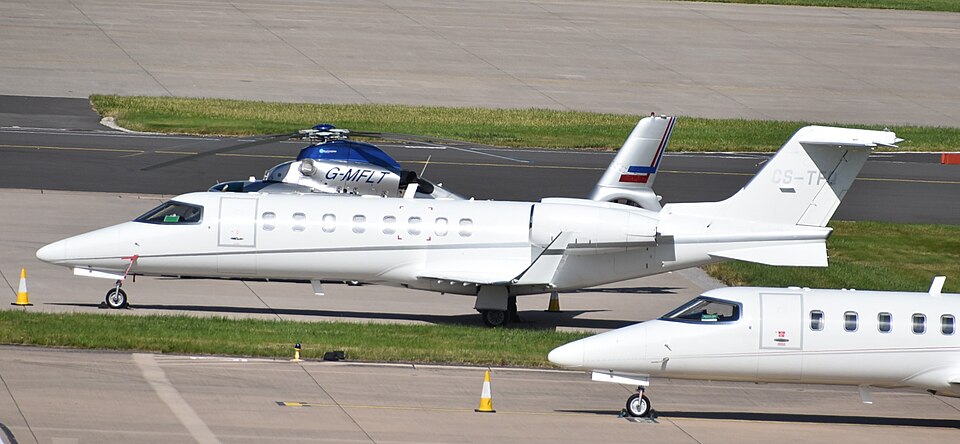
On 7 July 2018, a Bombardier Learjet 45XR, registration CS-TFQ, operated by Airjetsul, Sociedade de Meios Aéreos, Lda., departed from Málaga-Costa del Sol Airport (LEMG) at 11:35 UTC en route to Cascais Municipal Aerodrome (LPCS) in Portugal. The aircraft carried two pilots and three passengers. During the climb, a white MAIN HYD QTY LO message appeared on the Crew Alerting System (CAS) display.
Upon reaching FL320, approximately 11 km east of Seville Airport, the crew noted a significant loss of hydraulic fluid in the main hydraulic system. Successive alarms indicated decreasing hydraulic pressure. The crew decided to divert to the nearest suitable airport and requested clearance to land at Seville Airport (LEZL). The aircraft landed without further incident, although the crew performed a manual landing gear extension. No injuries occurred among the crew or passengers, and the aircraft was not damaged.
Investigation Findings
The technical investigation concluded that the incident resulted from a loss of fluid from the main hydraulic system due to leaks that developed in flight through the electrical connector of the pressure switch, part number 7629001004-001. A contributing factor was the failure to implement Bombardier Service Bulletin (SB) 45-29-17, dated 28 January 2013, which recommended replacing that pressure switch with an improved version, part number 6629101004-001 (S8 and S9), to reduce the probability of leaks and pressure drops.
The investigation also noted that the operator had not established procedures to evaluate the implementation of service bulletins that could affect aircraft airworthiness.
Safety Recommendation
The report included a recommendation directed to the operator to establish procedures to assess the implementation of service bulletins that may compromise the airworthiness of its aircraft and, consequently, aviation safety.