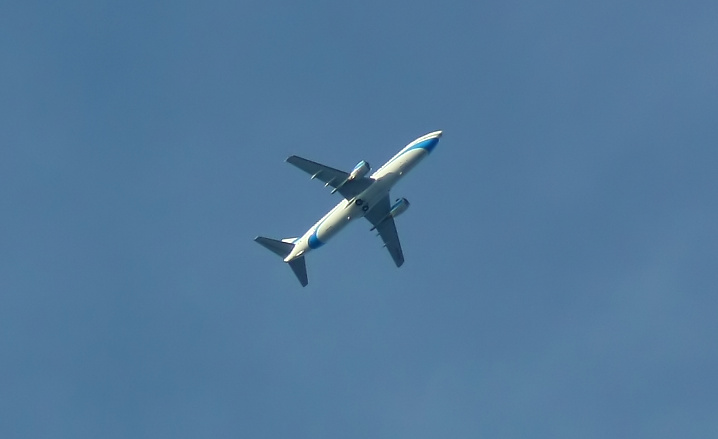
TCAS RA triggered by loss of separation in Barcelona TMA

Casualties unknown • TMA de Barcelona (Barcelona), ES

A Boeing 737-400 and a Cessna 172 experienced a loss of separation near Girona Airport following a network outage and air traffic control sector reconfiguration.

What happened

On 28 September 2016, at approximately 09:05 UTC, a loss of separation occurred between a Boeing 737-400, registration SP-ENA, operated by Enter Air, and a Cessna 172, registration EC-JOB, operated by Barcelona Flight School. The incident took place within the Barcelona TMA during the approach to runway 02 at Girona Airport.

Prior to the event, a significant technical failure occurred when the REDAN air navigation data network went offline for approximately 26 minutes. This outage resulted in the loss of the Girona radar signal, disrupted communications between the Girona Tower and Barcelona ACC, and disabled the SACTA system. Simultaneously, the Barcelona TMA underwent a configuration change from West to East, leading to the opening of new control sectors, D1E and TGR.

At 08:59, the controller in sector D1E cleared the Cessna 172 to complete its approach to Girona without notifying the newly opened TGR sector. Shortly after, at 09:00, the TGR controller cleared the Boeing 737-400 for the same approach. The two aircraft converged near the TISGO intermediate approach fix, resulting in a horizontal separation of only 0.4 NM and a vertical separation of 200 ft. This triggered a TCAS RA on the Boeing 737-400. The crews maintained visual contact throughout; the pilot of the Cessna 172 performed a 360-degree left turn to resolve the conflict, while the Boeing 737-400 continued its approach and landed safely.

The investigation

The CIAIAC investigation examined the impact of the REDAN network outage and the simultaneous reconfiguration of the TMA sectors. Investigators reviewed the workload of the controllers in sector D1E, who were managing multiple aircraft performing aerial work and arrivals at Barcelona Airport. The investigation also analyzed the communication breakdown between the Girona Tower and the Barcelona ACC, which necessitated the use of contingency telephone communications during the radar outage.

Findings

  • The primary cause of the incident was the loss of situational awareness by controllers in sectors D1E and TGR following the opening of new sectors.
  • The simultaneous occurrence of a TMA configuration change and the opening of new sectors created a high workload for the D1E controller.
  • The temporary outage of the REDAN network caused the loss of radar targets for aircraft below 3,200 ft and forced controllers to focus on locating specific missing traffic, leading them to overlook the Cessna 172.
  • The presence of multiple aircraft performing aerial work in the sector further diverted controller attention.
  • The use of infrequent routes and the specific timing of the sector openings contributed to the lack of coordination between the D1E and TGR controllers.

Probable cause

The incident was caused by a loss of situational awareness among air traffic controllers in the D1E and TGR sectors, driven by a high-workload environment following a TMA reconfiguration and a simultaneous failure of the air navigation data network.

All Boeing 737-400 accidents →

Frequently asked questions

What happened in the 2016-09-28 Boeing 737-400 accident near TMA de Barcelona (Barcelona), ES?

A Boeing 737-400 and a Cessna 172 experienced a loss of separation near Girona Airport following a network outage and air traffic control sector reconfiguration.

What aircraft was involved and where did it happen?

The accident on 2016-09-28 involved a Boeing 737-400, registration SP-ENA, at TMA de Barcelona (Barcelona), ES.

What was the probable cause of the accident?

The incident was caused by a loss of situational awareness among air traffic controllers in the D1E and TGR sectors, driven by a high-workload environment following a TMA reconfiguration and a simultaneous failure of the air navigation data network.

Investigation report by the Spanish Civil Aviation Accident and Incident Investigation Commission (CIAIAC). Original record: https://www.transportes.gob.es/recursos_mfom/2016_038_in_eng_1.pdf. This page is a structured re-presentation; facts and quotes are in the Comision de Investigacion de Accidentes e Incidentes de Aviacion Civil (CIAIAC), Spain - Ministerio de Transportes y Movilidad Sostenible.

Loading the flight search…