What happened
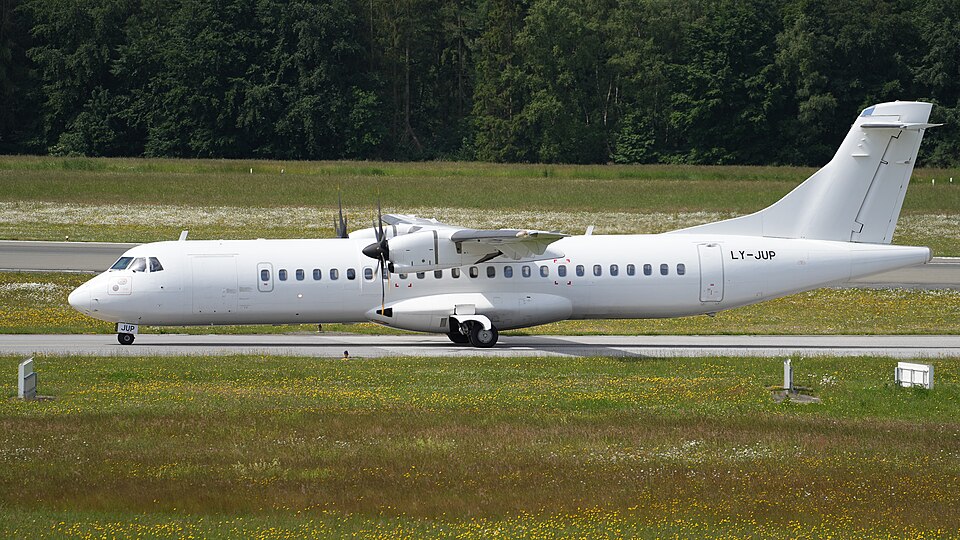
On August 31, 2025, a Jump Air ATR 72-212A (registration LY-JUP) was operating a commercial flight from Sal Airport (GVNP) to São Filipe Airport (GVSF). Shortly after takeoff and reaching an altitude of approximately 1,300–1,500 feet, the left engine suffered a sudden flameout. The failure occurred abruptly with no warning, impact, or vibration, causing power to drop to zero within one to two seconds.
The captain immediately assumed control of the aircraft. Following standard emergency procedures and memory items, the crew continued their climb to 4,500 feet. After consulting with technical operations, they decided to return to Sal rather than divert to São Filipe, citing the latter's short runway and lack of precision approach capabilities. The crew declared a Mayday emergency via transponder code 7700, though initial ATC responses were delayed.
The crew attempted an in-flight restart of the left engine but was unsuccessful. They briefed the cabin crew for an emergency landing and initiated an approach to Runway 03 at Sal under visual meteorological conditions. The aircraft landed smoothly with one engine operating. During the rollout, a strong yaw to the right occurred due to asymmetric thrust, which the crew managed using differential braking and increased power on the right engine. This caused a subsequent yaw to the left, leading to a minor excursion off the paved surface before the aircraft came to a stop near taxiway A. No injuries were reported, and there was no damage to the aircraft or airport infrastructure.
The investigation
The Instituto de Prevenção e Investigação de Acidentes Aeronáuticos e Marítimos (IPIAAM) was notified of the incident on August 31, 2025. An investigation team was dispatched to collect technical and operational evidence, including interviews with the crew and analysis of relevant documents.
The investigation verified that both pilots were properly licensed and medically certified. The aircraft held a valid airworthiness certificate, and maintenance records showed no deferred items under the Minimum Equipment List (MEL). The investigation focused on human factors, operational procedures, and material conditions to determine if further safety investigation was warranted.
Findings
The primary finding was that the left engine failed in flight without prior warning. The crew demonstrated effective resource management and stress resilience by following established emergency checklists and successfully executing a single-engine landing. The aircraft's maintenance status was confirmed as compliant with airworthiness requirements at the time of the event.
Safety action
IPIAAM concluded that the initial information gathered did not provide additional value for safety investigation or operational improvement. Consequently, the investigation process was closed without issuing formal safety recommendations.