Incident Overview
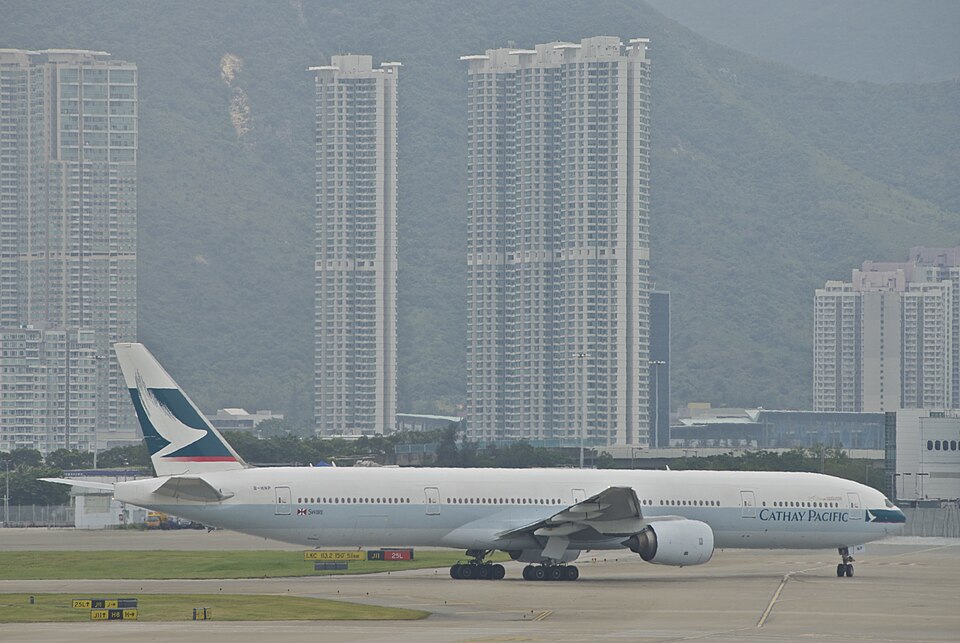
On 26 January 2019, a Cathay Pacific Airways Boeing 777-367 aircraft (registration B-HNP) was operating scheduled passenger flight CPA583 from New Chitose Airport (RJCC) in Japan to Hong Kong International Airport (VHHH). The aircraft was carrying 16 crew members and 358 passengers. At approximately 2200 hours local time, while cruising at flight level 370 over the Taipei Flight Information Region, the Captain (CN) experienced a sudden loss of visual acuity. He was serving as Pilot Monitoring, with the First Officer (FO) as Pilot Flying. The autopilot system was engaged per standard operating procedures.
Pilot Incapacitation and Response
The CN's condition deteriorated, and he informed the FO of his loss of visual acuity, declaring pilot incapacitation. He briefed the FO and the Inflight Service Manager (ISM) that he was relinquishing control, and the crew accomplished the Non-Normal Checklist for an Incapacitated Pilot. The FO assumed control of the aircraft. The CN instructed the FO to contact the operator's Integrated Operations Centre (IOC) and the Aviation Medical Office (AMO) for medical advice and ambulance arrangements. A Senior Purser (SP) took an observer seat in the cockpit to assist the FO with coordination and checklist reading. The CN remained conscious and communicative, strapped in the left seat in a full-back position to avoid interfering with aircraft operation.
Medical and Operational Actions
Following advice from the AMO, the CN's condition improved. The episode lasted approximately 30 minutes, after which his normal sight returned. As the flight entered the Hong Kong FIR, the FO made a PAN-PAN call requesting priority approach. The FO completed the approach, and the aircraft landed safely at 2255 hours, taxiing to bay W69 without further incident. Upon arrival, the CN was able to walk and was taken to a hospital for medical supervision. There was no damage to the aircraft and no injuries to persons.
Background Information
The aircraft, a Boeing 777-367 built in 2005 (serial number 34243), was powered by two Rolls-Royce Trent 884B-17 turbofan engines. Both pilots held valid Airline Transport Pilot Licences. The CN was 62 years old with 22,896 total flight hours, and the FO was 34 years old with 8,223 total hours. The aircraft's cockpit and communications systems were serviceable; no deferred defects were noted. The operator's procedures for pilot incapacitation were followed as outlined in the Boeing Flight Crew Training Manual and the operator's Operations Manual Part A. The investigation noted that the event was classified as an incident per ICAO guidance, and no safety recommendations were proposed.