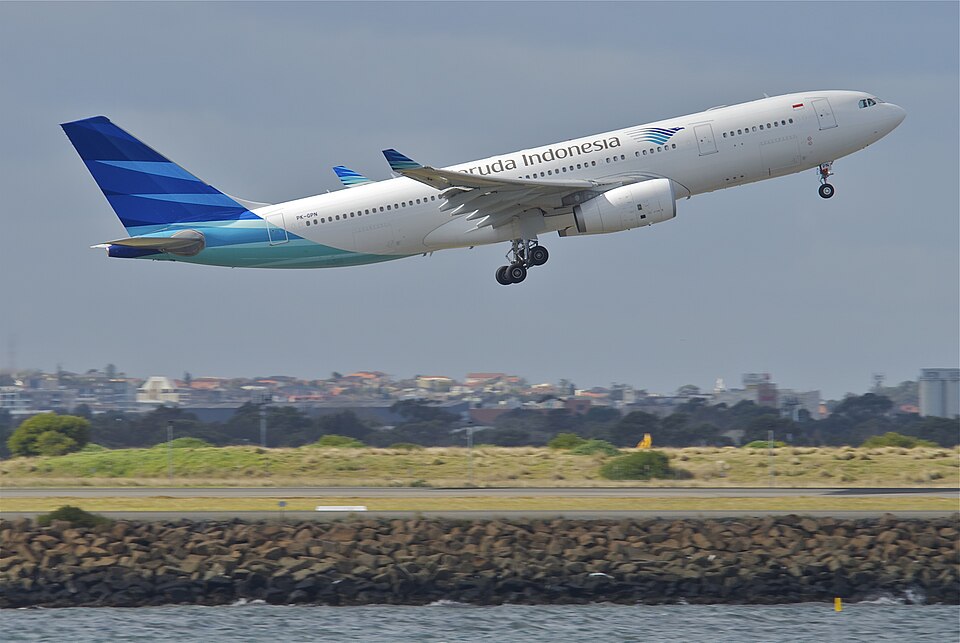
Flight Details
On 13 December 2013, an Airbus A330-200, registration PK-GPN, operated by PT. Garuda Indonesia, was conducting a scheduled passenger flight from Ngurah Rai International Airport, Bali, to Soekarno-Hatta International Airport, Tangerang, Indonesia. The flight carried two pilots, 11 flight attendants, and 185 passengers.
Occurrence
No system abnormalities were reported or recorded during the flight from takeoff until the time of the occurrence. The weather report for Soekarno-Hatta International Airport, broadcast at 08:00 UTC and 08:45 UTC, indicated moderate rain and a thunderstorm. During the landing, the aircraft deviated from the runway and experienced a runway excursion. The flight data recorder (FDR) data, collected from 350 feet and 201 feet of radio altimeter height, were used in the investigation to plot the flight trajectory and touchdown point. The right main wheel left a mark on the runway shoulder.
Damage
Damage to the aircraft included a leak on the right main landing gear actuator and one tire that was torn and cut. No other damage was reported.
Investigation
The Komite Nasional Keselamatan Transportasi (KNKT) investigated the serious incident. The investigation included analysis of FDR data, cockpit voice recorder information, and simulation on an A330 simulator. The operator's Basic Operation Manual (BOM) and Flight Crew Training Manual (FCTM) were reviewed as part of the investigation.