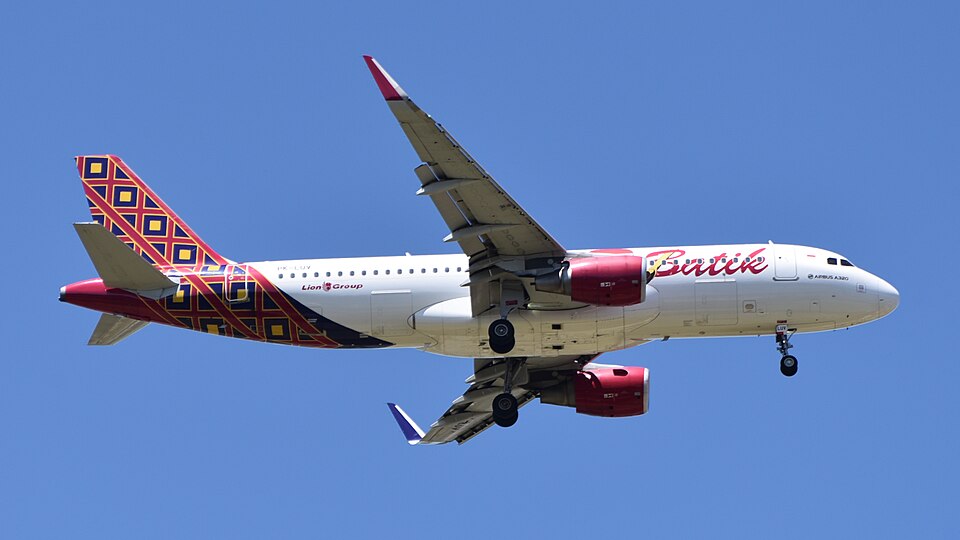
History of the Flight
On 25 January 2024, an Airbus A320 aircraft registered PK-LUV was operated by Batik Air Indonesia as a scheduled passenger flight from Soekarno-Hatta International Airport, Jakarta to Halu Oleo Airport, Kendari and return. The first flight departed Jakarta at 0314 local time (2014 UTC on 24 January) with two pilots and four flight attendants. The aircraft landed at Kendari at 0711 local time (2311 UTC on 24 January). After a short transit, the return flight departed Kendari at 0805 local time (0005 UTC) with 153 passengers onboard. The pilot-in-command (PIC) acted as pilot monitoring and the second-in-command (SIC) as pilot flying.
Events During Cruise
At 0037 UTC, the aircraft reached cruising altitude of 36,000 feet. Both pilots removed their headsets and increased the cockpit loudspeaker volume. The PIC asked the SIC for permission to rest and was granted. The PIC fell asleep shortly after, and the SIC assumed both pilot flying and monitoring duties. At 0122 UTC, the PIC briefly woke and asked if the SIC wanted to rest; the SIC declined. After a short conversation, the PIC resumed sleeping. At 01:43:32 UTC, the SIC contacted Jakarta Area Control Center (ACC) to report position and follow the KURUS 2G Standard Instrument Arrival. The aircraft was heading 250° to avoid bad weather. Shortly after, the SIC inadvertently fell asleep. Jakarta ACC called the flight multiple times without response.
At 0211 UTC, 28 minutes after the SIC's last transmission, the PIC woke up, realized the aircraft was off the correct flight path, and saw the SIC sleeping. The PIC woke the SIC and responded to calls from another pilot and Jakarta ACC, stating that the flight had experienced radio communication problems which were now resolved. The flight continued and landed at Jakarta without further incident.
Crew Fatigue and Rest Management
The SIC had informed the PIC before the first flight that he had not obtained adequate rest. During the first leg, the SIC rested for about 30 minutes in the cockpit. The investigation found that both pilots consumed instant noodles during the transit at Kendari but no proper rest facilities were used. The return flight departed at a time when the pilots' circadian rhythms were likely at a low point.
Contributing Factors
The KNKT identified several contributing factors: the PIC's decision to continue the flight after being informed by the SIC that he did not have adequate rest; the lack of effective fatigue management by the operator, including an absence of guidance on alternative rest strategies and a non-punitive reporting culture; and the failure to provide pilots with clear procedures on cockpit rest management.
Safety Recommendations
The KNKT issued safety recommendations to Batik Air Indonesia to improve fatigue risk management, enhance pilot training on rest utilization, and foster a reporting culture that encourages crew to express fatigue concerns without fear of reprisal.