Ultralight Crash in Chonburi Kills Pilot Due to Wing Fabric Failure
An X-AIR HAWK ultralight crashed in Chonburi, Thailand, killing the pilot and injuring a passenger. The accident was caused by deteriorated wing fabric and…
On October 8, 2001, a McDonnell Douglas MD-87 (registration SE-DMA) operated by Scandinavian Airlines System - SAS was involved in an aviation accident near Milan-Linate, Italy during takeoff. 110 people were killed. Investigators recorded the probable cause as: The immediate cause was the runway incursion by the Cessna onto the active runway without specific clearance. This summary draws on records from the Bureau of Aircraft Accidents Archives (B3A); 5 related events involving the same aircraft type or operator are linked below.
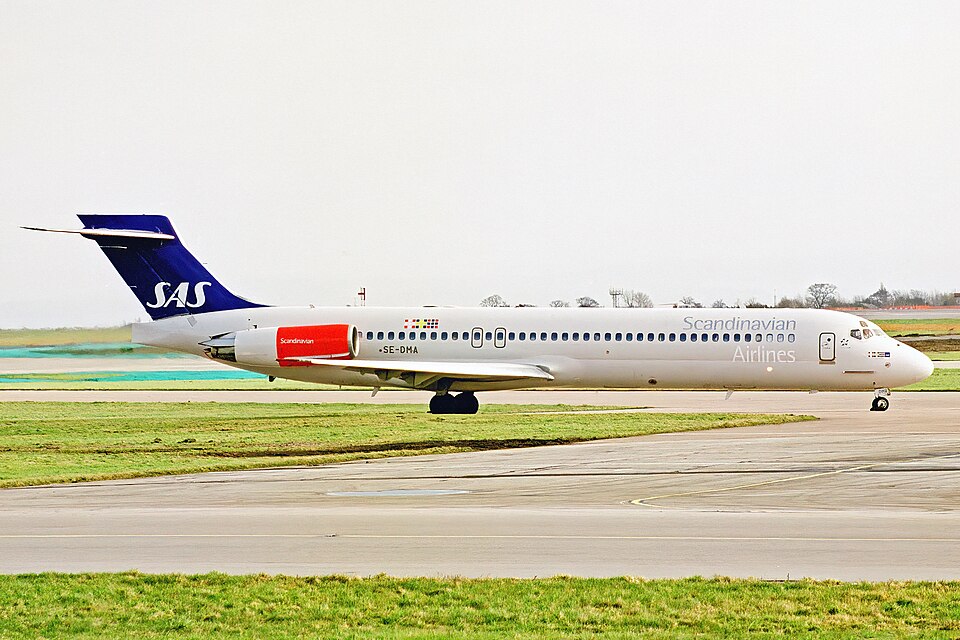
On 8 October 2001, a SAS MD-87 collided with a Cessna 525A on runway 18L/36R at Milan-Linate after the Cessna entered the active runway without clearance during low visibility.
The immediate cause was the runway incursion by the Cessna onto the active runway without specific clearance. Contributing factors included low visibility, high traffic volume, lack of adequate visual aids, the Cessna crew using the wrong taxiway, failure to check the Cessna crew qualification, pressure to commence the flight despite weather conditions, inadequate publications, lights, markings, and signs, official documentation failing to report unpublished markings, operational procedures allowing high traffic volume in reduced visibility, non-standard radio communications, ATC personnel not realizing the Cessna was on taxiway R6, and the ground controller issuing a taxi clearance based on a position report that had no meaning to him. Systemic factors included non-compliance with ICAO Annex 14, absence of a functional Safety Management System, non-compliance with ICAO Annex 1 for ATC competence maintenance, and non-conforming LVO implementation by ENAV.
An X-AIR HAWK ultralight crashed in Chonburi, Thailand, killing the pilot and injuring a passenger. The accident was caused by deteriorated wing fabric and…
A Challenger II Special ultralight aircraft (U-B23) landed off-runway at Pai Airport, Mae Hong Son, on September 17, 2024, due to a gust of wind. No injuries…
The Polish aviation safety authority is investigating a serious incident involving an AT-3R100 aircraft that occurred on September 2, 2024. The investigation…
A SZD-48-3 glider suffered damage when its left wing struck a ground obstacle during a low final approach at EPWK on June 20, 2025. The pilot was uninjured.
A 39-year-old skydiver died after a hard landing near Leszno on May 1, 2026. The PKBWL preliminary report indicates the fatal impact resulted from a late,…
A student pilot crashed an SZD-50-3 Puchacz glider into the airfield fence during a solo training flight on June 6, 2026. The pilot was uninjured, but the…