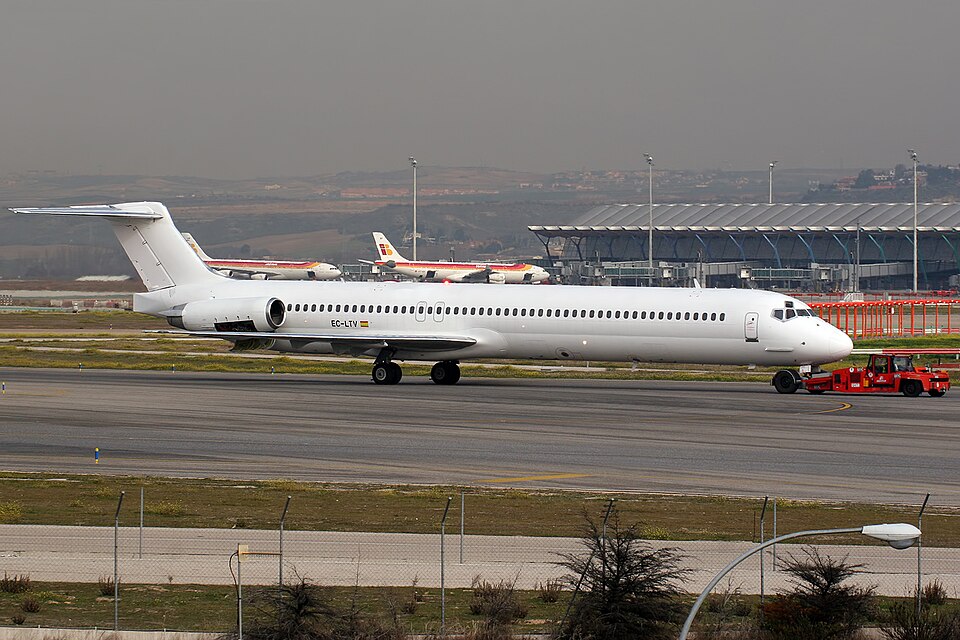
Accident Scenario
The Swiftair MD-83, operating flight AH5017 on behalf of Air Algérie, departed Ouagadougou at 0117Z and was scheduled to land in Algiers at 0510LT but never arrived. The aircraft was carrying 116 people, comprising 110 passengers and a crew of six. The last known position was west of Gao, Mali. Approximately 16 hours after the aircraft disappeared, the wreckage was located about 50 km west of the city of Gossi in southern Mali. The aircraft disintegrated upon impact, and no survivors were found among the occupants. At the time of the accident, weather conditions in the region of Gao included storms, winds, turbulence, and icing up to an altitude of 40,000 feet. The aircraft was flying west of this marginal weather area and, according to the French BEA graphic, did not properly circumvent the turbulent zone. The aircraft began a left turn from 31,000 feet and spiraled to the ground in less than three minutes, reaching a left bank of 140° and a nose-down pitch of 80° at impact. The last Flight Data Recorder (FDR) reading, at 0147LT and 15 seconds, recorded an altitude of 1,600 feet, a speed of 380 KIAS, and a very high rate of descent.
Investigation Findings
The investigation revealed that about two minutes after leveling off at 31,000 feet, the Engine Pressure Ratio (EPR) – the primary parameter for engine power management – became erroneous on the right engine and, approximately 55 seconds later, on the left engine. This was likely due to icing of the pressure sensors located on the engine nose cones. Normally, when the engine anti-ice protection system is activated, these sensors are heated by hot air. Analysis of the available data indicated that the crew likely did not activate the system during climb and cruise. The erroneous EPR information transmitted to the autothrottle caused it to limit engine thrust. Consequently, thrust was insufficient to maintain cruise speed, and the aircraft decelerated. The autopilot responded by increasing the aircraft's pitch attitude to maintain altitude. Over a period of about 5 minutes and 35 seconds, the speed dropped from 290 knots to 200 knots, and the angle of attack increased until the aircraft stalled. Approximately 20 seconds after the stall began, the autopilot disengaged. The aircraft then rolled abruptly to the left, achieving a bank angle of 140° and a nose-down pitch of 80°. Recorded parameters indicated no stall recovery maneuvers by the crew; in fact, the flight control surfaces remained deflected nose-up and in a right roll throughout the descent.
Probable Cause
The investigation concluded that the accident was caused by a combination of several factors, including the fact that the engine anti-icing systems were not activated by the crew.