Synopsis
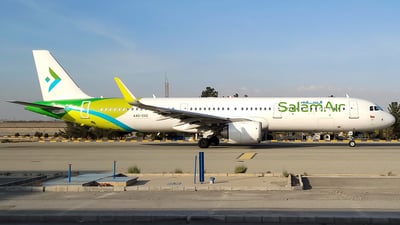
On 30 September 2024, at 12:15 UTC, a Salam Air Airbus A321-251N, registration A40-OXG, experienced a serious incident involving the Ground Proximity Warning System (GPWS). The aircraft was on a domestic scheduled flight from Salalah International Airport (OOSA) to Muscat International Airport (OOMS). The incident occurred approximately 20 nautical miles at 230 degrees from Muscat VOR, in the Sultanate of Oman.
History of Flight
The aircraft departed Salalah at 11:15 UTC and tracked inbound to Muscat for an ILS approach to Runway 08L. The flight crew established communication with the approach air traffic controller (ATCO) and identified as OMS104. They reported descending to 11,000 feet while passing flight level 180. The crew requested a left heading of 340 degrees for self-positioning on final, which was approved.
While approaching 8,000 feet, the ATCO cleared the crew to descend to 4,000 feet visually. The crew maintained 8,000 feet until visual and then commenced descent to 4,000 feet. They corrected heading to 355 degrees to stay away from terrain, flying visually in the valley. As they neared 4,000 feet, the crew reduced vertical speed to minimize the rate of descent.
During this descent, the Enhanced Ground Proximity Warning System (EGPWS) issued a caution "terrain ahead." The crew reacted by leveling off with zero vertical speed, despite being visually clear of terrain by more than 2,000 feet AGL. While flying straight and level at green dot speed, the EGPWS escalated to a "pull up" warning. The crew applied the memory items as trained, initiated a climb, and requested vectors for an ILS approach to Runway 08L. Normal operations followed thereafter, and the aircraft landed safely at Muscat.
Subsequent Actions
The Oman Transport Safety Bureau (OTSB) was notified of the serious incident by the operator on 1 October 2024 and by the Civil Aviation Authority on 5 October 2024. The OTSB classified the occurrence as a serious incident and appointed an investigator-in-charge and investigation team. Notifications were sent to the State of Design and Manufacturer, Airbus, and the French BEA.
Conclusion
All procedures were followed, and the safe conduct of the flight was ensured. The aircraft landed safely at its destination.