What happened
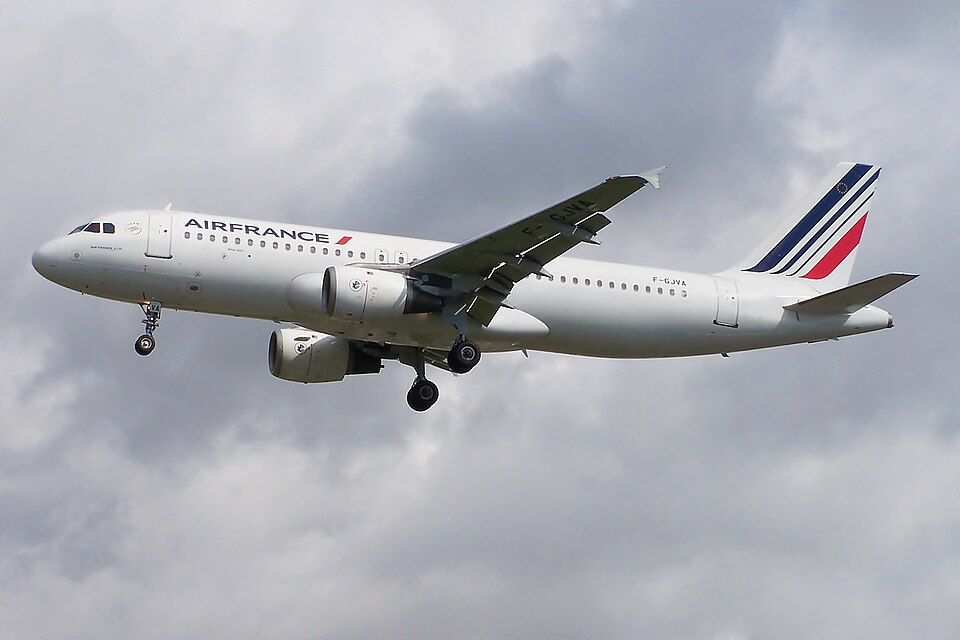
On March 28, 2012, an Airbus A320, registration F-GJVA, operated by Air France, was performing a commercial flight from Paris Charles de Gaulle to Hamburg. Due to a change in wind direction, the airport configuration had shifted, necessitating an ILS CAT I approach to runway 23. Prior to intercepting the localizer, the pilot flying (PF) decided to fly the approach manually, disengaging the autopilot and auto-thrust, and opted for a flap 3 configuration due to a reported 50-knot crosswind.
While the aircraft was on approach, a Boeing 737 that had landed on runway 33 was held at a holding point on taxiway D. This position placed the 73/7 within the ILS glide slope critical zone for runway 23. As the F-GJVA approached, the presence of the 737 caused the glide slope signal to fluctuate and provide erroneous data. The flight crew initially perceived the aircraft as being below the glide path, leading the PF to pitch down and reduce thrust. This resulted in a steep descent rate of approximately -2,900 ft/min.
As the signal continued to fluctuate, the aircraft eventually climbed back toward the path, but the crew, struggling with manual flight and monitoring tasks, did not immediately recognize the signal error. When the glide slope indication suddenly swung to a high limit, the crew decided to execute a go-around. During the missed approach, the PF applied an excessive pitch attitude and failed to move the thrust levers to the TOGA position immediately. This led to a significant drop in airspeed, triggering the "SPEED, SPEED, SPEED" warning and eventually activating the ALPHA FLOOR protection and auto-thrust engagement.
The investigation
The investigation, conducted by the BEA, examined flight data from the QAR, ATC communications, and controller testimonies. The investigation focused on why the ILS signal was compromised and why the crew's response to the go-around led to the activation of flight protections. The BEA also examined the positioning of the holding point at Hamburg, which was found to be located within the ILS glide slope critical zone, contrary to ICAO recommendations.
Findings
- The primary cause of the signal interference was the presence of an aircraft in the ILSD glide slope critical zone, caused by the non-compliant positioning of the runway 23 holding point.
- The Tower controller's perception of the risks associated with ILS interference was likely flawed, as they did not prevent the 737 from entering the critical zone nor notify the Approach controller of the situation.
- The crew's decision to fly the approach manually, combined with the task of reconfiguring the aircraft for flap 3, reduced their capacity to monitor primary flight parameters effectively.
- The inadequate execution of the go-around procedure, specifically the excessive pitch and delayed thrust application, led to the activation of the ALPHA FLOOR protection.
Safety action
- The BEA recommended that the German airport supervisory authority (BAF) ensure no holding points are located within ILS critical zones at Hamburg.
- The BEA recommended that the LBA (German civil aviation authority) ensure controllers are fully aware of the risks posed by vehicles or aircraft entering ILS critical zones.